Showing posts with label 2013. Show all posts

Monday, March 17, 2014

Honda Odyssey Release Date

2013 Honda Odyssey Release Date - Welcome returning our beloved reader!!! How do you do? Are you fine? We wish so. Please appreciate in this web page because we provide you everything thatwhat do you want to discover. Good sir, we will tell you about 2013 Honda Odyssey Release Date. Perhaps you still has the query when 2013 Honda Odyssey Release Date. Thus, we want explain about it.

2013 Honda Odyssey Release Date
2013 Honda Odyssey minivan is best for you if you are hip to the techniques which minivan individuals going companies Nonpareil and you wish an example of kind peerless. Car changes were very unlikely to enhance in any significant way, again as the excellent all around minivan and the bit of style announcement as well. Predict the gas usage to remains at or near the top of classification and for the version of the 2013 Honda Odyssey for Reprise easy however important compensate features, like the ability to secure in the five seat kid security guidelines. 2013 Honda Odyssey minivan was as efficient and realistic and efficient as SUVs. With improvisation, car enhancing is evidence of performance. This car shall be a representation image of 2012 Journey version, except maybe for the new colour option or two and perhaps the a little bit different rim designs that look. Its overall look of a nostril and end will not change and there will be character selections that zig-zag in the end of the returning aspect cup. The Honda contacting it a and to some vision might indicate the end place had broken from the whole system.

2013 Honda Odyssey was extended the place of minivan in more techniques than one. Michelin PAX Program run sleek rim specialized was first provided in a latest version of a Honda Odyssey. Now, you could get up to 150 miles at 50 mph versatility with this engineering. This car was loaded with fantastic unequalled several. It wishes to do it again the variety of seven designs. Again to begin the seven seat 2013 Honda Odyssey foundation style. Go up the actions will be better equipped Journey EX. That will be followed by an Journey EX-L with the set furnishings. The Honda said the EX-L is the most well-known and the best possible version of the person income would again be the EX-L version with a Back Entertainment, but took the name of the DVD system with 9 inches wide show to the ceiling. 2013 Honda Odyssey Release Date in late summer time season or starting sept 2012.

Sunday, March 16, 2014

Hyundai Genesis Coupe


  •  Hyundai Genesis Coupe, 2013

The Hyundai Motor America introduced the significantly redesigned 2013 Hyundai Genesis Coupe in a North American debut at the 2012 Detroit North American International Auto Show. In keeping with impressive performance upgrades, Genesis Coupe now sports more aggressive coupe styling, complemented by improved interior materials and design. Both 4-cylinder and V6 engines benefit from significant technology enhancements, with the 3.8-liter V6 engine receiving sophisticated direct-injection technology and the 2.0-liter turbocharged engine upgrading to a more precise twin-scroll turbocharger and larger intercooler. Automatic transmissions for these two models now have 8-speeds, with paddle-shift SHIFTRONIC manual-shifting capability. Hyundais proprietary telematics platform, Blue Link, is now available, providing Hyundai Genesis Coupe owners with a variety of infotainment services to meet their individual connectivity needs.

AGGRESSIVE DESIGN CUES MATCH ENHANCED DYNAMIC PERFORMANCE
The reshed Hyundai Genesis Coupe strikes a more menacing demeanor, with an aggressively redesigned front fascia, grille, headlights, LED daytime running lights, fog lights and hood with heat extractor cues. The side view reveals new, aggressive 18- and 19-inch alloy wheel designs with deeper dimensional sculpting. Finally, the rear taillights provide a visual spark via premium LED illumination and new contours. Of course, the traditional rear-drive sport coupe proportions remain, with a long wheelbase and short front and rear overhangs producing a classic wedge-like profile. Genesis Coupes bodyside character line is an innovative "Z"-shaped design that integrates seamlessly with a unique, drop-beltline rear window graphic.

Genesis Coupes arching roofline and tapering greenhouse highlight the exterior profile and emphasize the cars broad shoulders and wide stance. To complete the aggressive sports car look, the depth between the fenders and the greenhouse has been maximized.

Enlarged openings in the front fascia allow for better engine breathing along with a more aggressive look. Dual asymmetrical exhaust tips integrated with the blackout rear diffuser treatment complete the performance message from the rear.

POWERTRAIN ENHANCEMENTS
Both Hyundai Genesis Coupe engines receive significant technology upgrades, backing up its new design statement with impressive performance gains. The 3.8-liter Lambda DOHC V6 engine adds sophisticated direct-injection technology, adding 42 horsepower (a generous 14 percent increase) and 29 lb.-ft of torque (an eleven percent increase). Peak horsepower rises to 348 at 6,400 RPM, with peak torque increasing to 295 lb.-ft. at 5,300 RPM on premium fuel. In addition, lambda-engine anti-knock technology gives this V6 the versatility to run on regular fuel. This new direct-injected engine will easily propel the Genesis Coupe from zero to 60 mph in the lower five-second range on its way to an impressive 149 mph electronically-limited top speed. The Lambda V6 intake system also now employs an intake sound induction pipe into the cabin to ensure this engines aural character matches its visceral appeal.

To further broaden the power band, the 3.8-liter engine uses Dual Continuously Variable Valve Timing (Dual CVVT) and a Variable Intake System (VIS) that helps cylinders breathe most efficiently at both low and high RPM. The combination of high-pressure, precisely-metered direct injection with efficient cylinder breathing results in outstanding throttle response and off-the-line acceleration coupled with remarkable fuel efficiency. The V6 engine uses an alloy block and cylinder heads for lighter weight and thermal efficiency and features durable, quiet timing chains with no scheduled maintenance.

All these technologies serve to give Hyundai Genesis Coupe 3.8 an impressive power-to-weight ratio of only 10.0:1; significantly lower than the more expensive Infiniti G37 and BMW 335i.

Not to be outdone by its bigger brother, the turbocharged, intercooled 2.0-liter DOHC inline four-cylinder substitutes a new twin-scroll design for its turbocharger in addition to a larger intercooler with enhanced thermal efficiency. The twin-scroll design is more efficient at recovering exhaust energy and produces cooler cylinder temperatures than the former single-scroll design. In addition, the twin-scroll is more precise, with improved combustion efficiency, reduced turbo lag, leaner air/fuel ratios and more evenly distributed pressure in the exhaust ports, resulting in simultaneous power, efficiency and emissions improvements. Also, a 53 percent larger intercooler further reduces intake temperatures, providing denser, cooler air from which to develop even more power.

The turbocharged engine also benefits from Dual CVVT on both intake and exhaust camshafts. The 2.0-liter turbo now generates 274 horsepower (a massive 30 percent increase) and 275 lb.-ft. of torque (an impressive 23 percent increase) on premium fuel. And, unlike many competitive turbo engines, this turbos anti-knock sensors automatically adjust ignition timing and engine mapping to run perfectly on regular fuel, yielding 260 horsepower at 6,000 RPM and 260 lb.-ft. of torque at 2,000 RPM. The turbo engine also features a cast-aluminum cylinder block and cylinder head. All these improvements give the Genesis Coupe 2.0T a power-to-weight ratio of 12.3, superior to the upcoming Scion FR-S sports coupe and the Honda Civic Si.

Both V6 and 4-cylinder engines also feature deeper, baritone-sounding dual cat-back exhausts to complement more efficient breathing on the intake side. To ensure that all this new power is evenly distributed to the pavement, Hyundai Genesis Coupe also offers an available Torsen limited-slip differential on R-Spec and Track models.

REAR-WHEEL-DRIVE ARCHITECTURE
Genesis Coupes body shell makes generous use of ultra-high-tensile steel. The rear-wheel drive powertrain configuration provides a well-balanced 55:45 front-to-rear weight distribution for the 2.0T, and 56:44 for the 3.8 model.

SPORT-TUNED SUSPENSION
No well-tuned sport coupe chassis should give the perception of being overwhelmed by its powertrain, and Genesis Coupe is no exception to this rule. Spring, damper, and bushing ratings all have been precisely recalibrated to match these new powertrains with better road feel, more precise body motion control and improved ride comfort.

Hyundai Genesis Coupe employs a MacPherson strut dual-link front suspension and a five-link rear suspension setup. The front suspension is mounted to the body via a solid subframe that is lighter and stronger than a comparable multi-piece component would be. To help reduce body roll and tune the Genesis Coupes at-the-limit handling for maximum predictability, 23-mm diameter front and 19-mm diameter rear stabilizer bars are fitted.

While all Genesis Coupe models offer a true rear-drive sport driving experience, the high-performance Hyundai Genesis Coupe R-Spec and Track models raise the bar even higher with differentiated, track-tuned suspension calibrations. The R-Spec/Track suspension features both firmer front spring rates (seven percent) and rear spring rates (eleven percent), with matched damper rates. The Genesis Coupe R-Spec/Track models also deliver a significant increase in roll control over other versions of the Genesis Coupe via thicker stabilizer bars (24mm front/20mm rear). For 2013, all Hyundai Genesis Coupes receive improved low-velocity-control dampers for ined ride comfort coupled with improved body control.

In addition, all R-Spec and Track models now receive front strut camber adjustment bolts that can be easily installed in the front strut assembly at their owners discretion. These camber adjustment bolts allow approximately -1.5 degrees of negative front camber adjustment for sharper, more responsive apex turn-in and significant understeer reduction in competitive events.

Of course, superb Genesis Coupe structural rigidity sets the fundamental foundation for dynamic precision, regardless of specific suspension calibration.

STEERING
Hydraulic, RPM-sensing rack-and-pinion steering has been recalibrated with an even quicker, 13.8:1 ratio, delivering both linear feel and agile response to driver inputs. This new steering ratio is a full seven-percent quicker than the previous model, yielding intuitive steering response and precision. To further optimize driver ergonomics, telescopic adjustment also has been added to tilt adjustment for 2013.

TRANSMISSIONS
Both engines are mated to standard six-speed manual transmissions which have been extensively ined to provide more driver-friendly shift gating and balanced weighting precision. The clutch take-up, feel, and engagement characteristics also have been ined for optimum shifting ease and feel. Both engines now offer an in-house-developed eight-speed automatic with paddle-shift SHIFTRONIC manual-shifting capability. Each transmission has been specifically tuned to match its engines unique power and torque curve characteristics.

In addition to the steering wheel-mounted paddle shifters, each automatic offers shift capability via the shift lever according to individual driver perence. A clear LCD readout on the instrument panel shows the selected gear at all times.

HIGH PERFORMANCE BRAKING SYSTEMS
Brembo four-piston calipers clamp down on fade-resistant 13.4-inch ventilated front brake rotors and 13-inch ventilated rear rotors on both R-Spec and Track models. All other models get substantial 12.6-inch front ventilated rotors and 12.4-inch rotors in the rear with floating single-piston calipers.

UPSCALE INTERIOR REFINEMENT
The 2013 Genesis Coupe interior has been enhanced with distinctive, upscale features and design cues. The instrument panel crash pad features a stitched-seam appearance for a distinctly upscale look, and the parking brake lever is leather-wrapped on leather-equipped models. The instrument cluster now features an electroluminescent gauge cluster for premium ambience and superior readability. A new driver-side rear seat walk-in assist function has been added for more convenient rear seat access from the drivers side. Convenient seatbelt assist guides make it easier for front passengers to buckle up.

In addition, driver seat power lumbar support is now available and front seatback pockets are standard on all Genesis Coupes. A center stack multi-gauge cluster with instantaneous mpg, torque level (3.8 models) or turbocharger boost pressure (2.0T models), and oil temperature is standard on all trims. A center fascia tray with cover has been added for enhanced storage, and interior surfaces now have a softer touch with lower sheen for a more up-market feel. Sport front seats with deep side bolsters offer superb lateral support for enthusiastic driving in all trim configurations.

Among other premium features are an available Infinity premium audio system and two-stage front seat heaters. Hyundai Genesis Coupe also offers the convenience of a Proximity Key and push-button start.

INNOVATIVE TECHNOLOGIES
Genesis Coupe offers Xenon high-intensity discharge (HID) headlights, for brighter illumination intensity, more daylight-like lighting character and reduced power consumption. In addition, the visual cut lines of these HID headlights are razor sharp, providing maximum nighttime visibility to the driver without the risk of blinding oncoming traffic.

Music lovers will welcome the Genesis Coupes standard auxiliary input jacks (3.5 mm mini-jack and USB input) to accommodate and charge personal audio devices such as an iPod®. When an iPod or flash drive is connected through the USB port in the center storage compartment, not only does it play music through the vehicles audio system, but it also charges the iPod and allows the driver to access tracks with the steering wheel audio controls. This system also allows both driver and passengers to easily view song/artist/title information and control the music from the audio head unit rather than the iPod unit. This safety-oriented function allows the driver to keep his or her focus on the road at all times.

HYUNDAI BLUE LINK
Hyundai Blue Link telematics is available on 2013 Genesis Coupe with a 90-day complimentary trial period. The Blue Link platform is available on 3.8 Grand Touring/Track and 2.0T Premium trim levels. Blue Link can be accessed from the buttons on the rearview mirror inside the Hyundai Genesis Coupe, the web and via smart phone. Blue Link is offered in three telematics service packages: Assurance, Essentials and Guidance.

SEGMENT-LEADING STANDARD SAFETY TECHNOLOGIES
In keeping with Hyundais focus on offering segment-leading standard safety technologies across its lineup, the 2013 Genesis Coupe includes a wide range of both active and passive safety features. Standard safety technology includes driver and front passenger advanced frontal airbags, along with front seat-mounted side airbags, side air curtains and active front head restraints.

Genesis Coupe has strong unibody construction, along with front and rear crumple zones, bodyside reinforcements and five-mph energy-absorbing bumpers. The hood also includes buckling creases and safety stops.

The front seatbelts have pretensioners and force limiters, and the rear seats feature LATCH (Lower Anchors and Tethers for Children), which make affixing child safety seats easier.

All Hyundai Genesis Coupe models feature standard four-channel ABS with Electronic Brake-force Distribution (EBD) to optimize brake performance under various dynamic loading conditions. The system also includes Brake Assist, which provides maximum ABS-level braking force when a panic stop is detected.

Electronic Stability Control (ESC), one of the industrys most effective life-saving technologies, is standard in all Genesis Coupe models. Insurance Institute for Highway Safety (IIHS) studies suggest vehicles equipped with ESC experience 56 percent fewer fatalities in single-vehicle crashes than those without it.

In a nod to enthusiasts, 2013 Genesis Coupe now offers a specially-tuned three-stage driver-selectable ESC mode. This new three-stage ESC function offers more options for various driver perences and road conditions:
  • Full-on ESC function (default mode on start-up)
  • Intermediate ESC function with driver powertrain override control and retained ESC/TCS braking function
  • Full-off ESC function for uninhibited driver vehicle control in all conditions

The driver-selectable full-off ESC mode has been calibrated to provide drivers with a larger performance envelope should they choose to participate in competitive events such as autocrosses or track days. The Hyundai Genesis Coupe anti-lock braking system function (ABS) remains fully functional in all ESC modes to help drivers maintain steering control under adverse braking conditions.

COLOR PALETTE
With Genesis Coupes more aggressive exterior design cues, fresh exterior color offerings are now available, with seven new colors added to the palette. In keeping with Hyundai Genesis Coupe color names selected at launch, all new color names are derived from world-famous racing circuits and their most challenging track segments. These new colors include: Parabolica Blue, Catalunya Copper, Monaco White, Becketts Black, Circuit Silver, Gran Premio Gray, and Shoreline Drive Blue.

To further complement Hyundai Genesis Coupes freshened interior design and premium materials, a new tan leather interior, a new red leather bolster/red cloth insert interior, and a new gray leather bolster/gray cloth insert interior have been added to the interior color environment selections.

Thursday, March 13, 2014

Volkswagen Beetle Cabriolet Review And Prices

The 2013 Volkswagen Beetle Cabriolet is one of the latest version of 2013 Volkswagen. A 2013 Volkswagen Beetle cabriolet is visible when the image appears when the car is undergoing public road testing in Europe. The 2013 Volkswagen Beetle Cabriolet prices soon be revealed.

In intact, 2013 Volkswagen Beetle cabriolet looks more masculine than the previous variants. The roof at this time using a variant of the roof system that can be opened and closed. The similarities with 2013 Volkswagen Beetle Cabriolet Coupe increasingly evident when viewed side-window layout using chopped-down system that is used exactly the type Coupe.

The 2013 Volkswagen Beetle Cabriolet will be available with the same powertrain options offered on the standard Beetle, a 2.5-liter five-cylinder with a six-speed automatic, or a 2.0-liter TSI turbocharged four-cylinder with a DSG six-speed dual-clutch automatic. The 2013 Volkswagen Beetle Cabriolet larger motor makes 170 hp and 177 lb-ft of torque, while the smaller displacement turbo variant puts out 200 hp and 207 lb-ft of torque. Been heard 2013 Volkswagen Beetle Cabriolet will use three types of engine options. For the middle class or the car is equipped with a standard 2.5-liter engine capable of producing 170 hp. At the highest grade awarded by the 2.0-liter turbo-four that produces 200 hp. 2.0-liter TDI turbodiesel engine with 140 hp power installed in the lowest series Cabriolet.

Wednesday, March 12, 2014

BMW X1 Edition Powder Ride Car Model


2013 BMW X1 Edition Powder Ride Car Model
The BMW X1 Edition Dust Ride special edition model features xLine, roof rails, Aluminum satinated trim and storage package, including a front armrest. A number of excellent winter accessories comes as standard for the first time, a special edition model in figure 460 roof box (incl. BMW base support system), the ski and snowboard bag with a sporty design created specifically for this model, all weather mats, and a fitted in the luggage compartment mat. And there is another highlight of the lined up: no one purchases this special edition model will receive a high-quality, custom-designed double-K2 LTD Dust Ride, skiing, only available in conjunction with the X1 Edition of the Dust of the Ride.

2013 BMW X1 Edition Powder Ride Car Model

2013 BMW X1 Edition Powder Ride Car Model

2013 BMW X1 Edition Powder Ride Car Model
The BMW X1 Edition Dust Ride along with a full selection of BMW xLine design and equipment features. BMW xLine includes foreign items matt Glacier Silver, special 18-inch light-alloy wheels and the door sill trims, and a sports leather steering wheel with multifunction buttons, cloth/leather upholstery for seats, ornamental strips of dark copper and ambient lighting.

The BMW X1 Edition of the Dust of the Ride can be ordered in the non-metallic paint shades, Black, Alpine White, as well as the Valencia Orange, White Mineral, Mineral Gray, Ice Silver and Black Sapphire metallic finishes. Also contributing to the open look a special sticker on the doors and wheel arches compact BMW X model. The X-shaped graphics borrows BMW K2 Dust Ride the Concept motif, which symbolizes the smart and agile character of the BMW X1.

The outstanding design of the BMW X1 Edition Dust Ride and ski team that come included to provide winter sports fans in the crowd on both road and track. This individual look that expresses the thrill of the drive (or ride), sports enthusiasm, and way of life, a sense, the first quality of a depth. The launch of the BMW X1 Edition Dust Ride planned for November 2012, and the special-edition model will be available in the BMW X1 xdrive 20d bi-xenon, the BMW X1 xDrive28i, the BMW X1 xDrive18d, the BMW X1 and the BMW X1 xDrive20d xDrive25d guise. The Edition of Dust Ride upgrade priced in euros 3,450 .00 (Germany).

Monday, March 10, 2014

BMW X5

The first impressions of the brand new 2013 BMW X5 suggest that the large SUV will grow significantly, at least in size. This is necessary because of the smaller brother X3 also has risen, turn to the smaller family member X1 to have more freedom. This puts more at length the situation in the BMW X5 also offer optional seven-seater as well as can be. A key selling point for the U.S. market for the XXL BMW is designed uniquely.
2013 bmw x5
2013 bmw x5

The interior photos make a great display for the infotainment system recognize that disappears when not in use in the dashboard. Otherwise, is in the prototype - at least recognizable - yet much of the previous technique.

Engines
Fit to under the hood of the BMW X5 have also re-potent six-and eight-cylinder engine can be installed. In the current X5 3.0 liter come straight six-cylinder gasoline engine, with 200 kW / 272 hp) and 225 kW/306 hp, 4.4-liter and V (units with 300 kW/408 hp and 408 kW/555 hp (X5M ) are used. in the BMW diesels now offers a 3.0-liter turbo-diesel to power levels in the 180 kW/245 hp and 225 kW/306 hp.

At race pace on the Nurburgring, the BMW X5 prototype Scanned by us clearly outed as an eight-cylinder. For the green conscience - and with the fleet CO2 balance in the eye - but BMW certainly will provide a V6 hybrid Varinte. For the market launch in 2013 at BMW targeting.
2013 bmw x5

Saturday, March 8, 2014

Ford C MAX Hybrid


  •  Ford C-MAX Hybrid, 2013

Ford revealed two next-generation hybrid vehicles - including its first production plug-in hybrid electric vehicle - at the 2011 North American International Auto Show, bringing consumers more choice, versatility and style for high-mileage family-friendly vehicles.

Ford C-MAX Energi plug-in hybrid and C-MAX Hybrid are based on the new Ford C-MAX five-passenger multi-activity vehicle, and each will offer high mileage and low emissions as well as distinctive body design and a flexible interior. The plug-in hybrid and third-generation full hybrid leverage Fords global C-car platform, acclaimed powersplit architecture, next-generation driver information features and advanced lithium-ion battery systems.

The plug-in advantage
Targeted to achieve AT-PZEV (Advanced Technology Partial Zero Emissions Vehicle) status, Ford C-MAX Energi provides maximum fuel efficiency by pairing a high-voltage lithium-ion battery and electric traction motor with a high-efficiency Atkinson-cycle gasoline engine. This allows it to run in electric mode before using the gasoline engine.

The Ford C-MAX Energi offer more than 500 miles (800 kilometers) of overall driving range using the battery and engine - more than any other plug-in or extended-range electric vehicle. C-MAX Energi delivers better charge-sustaining fuel economy than Chevrolet Volt.

Ford C-MAX Hybrid is targeted to deliver better fuel economy than the 41 mpg Ford Fusion Hybrid, the most fuel-efficient sedan in America today. It builds on the success of the critically acclaimed powersplit architecture Ford uses in its current hybrids, allowing it to operate in fuel-saving electric mode beyond 47 mph.

Both the C-MAX Energi and C-MAX Hybrid models  built alongside the all-new 2012 Ford Focus and Focus Electric at Fords Michigan Assembly Plant in Wayne, Mich. The plants production is powered in part by one of the largest solar energy generator systems in the state. The C-MAX Energi and C-MAX Hybrid vehicles sold in Europe in 2013 will be built at Fords plant in Valencia, Spain, starting in 2013.

In general, plug-in hybrid vehicles offer several benefits:
  •     Electric driving range, perfect for emissions-free and silent city driving
  •     Potential consumer savings on energy and fuel costs thanks to improved fuel efficiency over a standard hybrid
  •     Reduced dependency on petroleum and increased energy independence
  •     Reduced environmental impact through reductions in greenhouse gas emissions
  •     Increased use of electricity from renewable energy sources (e.g. wind and solar), where available, for vehicle recharging
The development of Fords first-ever production plug-in hybrid leverages more than 200,000 miles of road testing conducted in collaboration with a coalition of 10 utility companies, the U.S. Department of Energy, the New York State Energy Research and Development Administration and the Electric Power Research Institute.

Getting charged up
Ford C-MAX Energi and C-MAX Hybrid will use advanced lithium-ion battery systems developed and assembled in-house by Ford in Michigan. Each system is smartly designed to maximize use of common, high-quality components, such as control board hardware that has proven field performance in Fords current, critically acclaimed hybrid vehicles.

Li-ion battery packs offer a number of advantages over the nickel-metal-hydride (NiMH) batteries that power todays hybrid vehicles. In general, they are 25 to 30 percent smaller and 50 percent lighter, which makes them easier to package in a vehicle, and can be tuned to increase power to boost acceleration or to increase energy to extend driving distance.

While Ford C-MAX Hybrid will operate much like todays hybrid vehicles, C-MAX Energi will benefit from daily charging to maximize its all-electric range. Thanks to the efficiencies of its right-sized battery system, the plug-in hybrid easily recharges 100 percent overnight on a 120-volt outlet.

A full charge in C-MAX Energi allows owners to increase their driving significantly in all-electric mode and drastically reduce their use of the on-board fuel engine.

On start-up, Ford C-MAX Energi operate in charge-depletion mode, providing electric driving range. When the battery has been depleted or certain conditions are met, it switches to charge-sustaining hybrid mode for continued optimal fuel efficiency.

Ford worked with a supplier to provide an industry-standard five-point plug for C-MAX Energi (and new Focus Electric) that is ergonomically comfortable to hold as well as durably and distinctively designed. The plug handle uses a matte-finished black rubber for a comfortable, non-slip grip and the plug head is shielded with a glossy white hard plastic to protect the electronics. The Ford Blue Oval trademark helps make the device immediately recognizable.

When the cord set connector is plugged into the vehicles charge port, which is located conveniently between the drivers door and front wheel well, it activates a light ring that loops around the port twice in acknowledgement of connectivity. The light ring then illuminates in quadrants as the vehicle charges. Flashing quadrants represent charge in progress and solid-lit quadrants show stages of charge completion. When the entire ring is solidly lit, the vehicle is fully charged.

Smarter interface
Ford C-MAX Energi owners have access to a suite of driver information systems - on-board and off-board - designed to help them manage the recharge process, manage the most eco-friendly route on-board, remotely control their vehicles charge and preconditioning settings, monitor battery state of charge and maximize energy efficiency to extend use of electric mode. Ford C-MAX Hybrid owners also will benefit from the on-board features.

Among these tools is a unique execution of MyFord Touch driver connect technology, especially for electrified driving. It offers exceptional configurability of vehicle information, including fuel level, battery power level, and average and instant miles per gallon.

The clusters new MyView feature allows drivers to access even more vehicle data such as the electrical demands of vehicle accessories, including air conditioning, which influences fuel economy and the electric driving range of the Ford C-MAX Energi.
The Brake Coach feature helps to educate drivers to optimize their use of the regenerative brakes to recapture kinetic energy and send it back to the battery, also reducing wear on the brakes.

Long-term fuel efficiency can be displayed in two ways - either as a traditional chart or using an innovative display that shows a growing leafy vine on the right side of the cluster. The more efficient a customer is, the more lush and beautiful the leaves and vines become, creating a unique visual reward for the drivers efforts.

To reinforce the message, at the end of each trip a display screen provides distance driven, miles gained through regenerative braking, fuel consumed (average and total) and a regenerative braking score.

New MyFord Mobile
Off-board, Ford C-MAX Energi owners in North America can maintain constant contact with the car anywhere they have mobile phone or web access using the Ford-developed MyFord Mobile.

MyFord Mobile enables access to a secure Ford website and smartphone/feature phone app to get instant vehicle status information, perform key functions remotely, monitor the cars state of charge and current range, get various alerts including when the vehicle requires charging, remotely program charge settings and download vehicle data for analysis.

The feature also allows the owner to program the vehicle to use electricity from the grid to heat or cool the battery and cabin while plugged in. For example, during hot summer months, owners can preprogram the car the evening before to be fully charged - and fully cooled to a particular temperature - by a certain time the following morning. Users can also locate the vehicle with GPS, remotely start the vehicle, and remotely lock and unlock the car doors.

Working with MapQuest, MyFord Mobile can communicate charge station and other points of interest to Ford C-MAX Energi using SYNCs Traffic, Directions and Information (TDI) service. Turn-by-turn guidance is provided by the in-car map-based Navigation System. Drivers can also get up-to-date charging station information in their vehicle directly through SYNC TDI simply by connecting to SYNC Services.

Value charging, powered by Microsoft
Using the value charging feature, powered by Microsoft, Ford C-MAX Energi owners in North America will be able to optimize their homes energy use and vehicle recharging practices. Value charging allows Ford customers to reduce their electricity costs by taking advantage of off-peak or reduced rates from their utility without a complicated set-up process.

Proven powersplit technology
Ford C-MAX Energi and C-MAX Hybrid build on the success of the critically acclaimed powersplit architecture Ford uses in its current hybrids, including the Ford Fusion Hybrid, winner of the 2010 MOTOR TREND Car of the Year award.

In a powersplit hybrid, the electric motor and gasoline-powered engine can work together or separately to maximize efficiency. The engine also can operate independently of vehicle speed, charging the batteries or providing power to the wheels as needed. The motor alone can provide sufficient power to the wheels in low-speed, low-load conditions, and work with the engine at higher speeds.

While this system enables the current Fusion Hybrid to operate in fuel-saving electric mode up to 47 mph, Ford is targeting higher electric operating speeds for Ford C-MAX Hybrid and even more capability for C-MAX Energi, which will have the advantage of additional battery power.

Fords global C-car strategy
C-MAX Energi and C-MAX Hybrid are two of at least 10 new models or derivatives that Ford will launch around the world based on its new global C-car platform - Fords first truly global One Ford platform.

Fords new generation of C-segment vehicles will be sold in more than 120 markets and will account for more than 2 million units annually. The C-segment accounts for one in four cars sold worldwide today and, in conjunction with the B-segment, is expected to rise to 50 percent of all cars sold globally by 2013.

The all-new C-MAX lineup also introduces a number of advanced new technologies to the compact multi-activity vehicle class. More often found only on larger or more premium cars, these technologies are focused on enhanced comfort, safety and sustainability, including the availability of new and powerful, yet highly fuel-efficient, low-CO2 Ford EcoBoost™ gas engines.

The previous European C-MAX established a reputation for providing a balance of enjoyable driving dynamics and impressive comfort. The all-new model is set to take that performance to a new level, giving drivers a class-leading combination of responsive, sporty handling and overall inement approaching the standards usually associated with larger, luxury vehicles.

Ford C-MAX Energi and C-MAX Hybrid are two of five electrified vehicles that Ford will bring to the North American market during the next two years. In addition, the Ford Transit Connect Electric small commercial van, built in collaboration with Azure Dynamics, began initial production at the end of 2010, and Focus Electric will launch in late 2011. A second next-generation hybrid electric vehicle will be announced later and available in North America and Europe in 2012.

Friday, March 7, 2014

Infiniti IPL G Convertible


  •  Infiniti IPL G Convertible, 2013

The 2013 Infiniti IPL G Convertible, which is set to go on sale in spring 2012, becomes the second member of the Infiniti Performance Line of premium performance vehicles. First introduced with the dramatic IPL G Coupe, IPLs product design philosophy focuses on "total vehicle performance," including unique driving attributes and exclusive exterior and interior features at a highly attractive price point. The new Infiniti IPL G Convertible features special aerodynamic styling pieces, the dynamic performance of an IPL-tuned V6, exhaust and suspension, 19-inch IPL aluminum-alloy wheels, and unique leather-appointed interior - along with the G Convertibles three-piece retractable hardtop.

The Infiniti IPL G Convertibles enhanced dynamic vehicle performance focuses on providing confident handling, flat ride and smooth ride comfort. The IPL suspension tuning and damping management philosophy is designed to optimize each aspect of the suspension, effectively connecting the driver to the road surface while minimizing uncomfortable vibrations. Front spring rates have been increase 14% over the G Convertible Sport model and rear spring rates increased 4%. Front stabilizer spring rates have been increased 6% over the G Convertible Sport model and rear stabilizer spring rates increased 125%. Shock tuning has also been adjusted and incorporates an all-new HF-type shock.

Based on the premium foundation of the Infiniti G37 Convertible, the IPL G Convertible features an advanced VQ37VHR 3.7-liter V6. The engine management system has been recalibrated through air-fuel mixture and ignition timing optimization, raising the maximum horsepower output point to 7,400 rpm. To obtain a natural acceleration feel, the torque curve from low revs to the maximum torque point (5,200 rpm) was tuned for linearity. The IPL-tuned high-flow exhaust is a full dual exhaust design with independent left and right large diameter pipes. The mufflers inner structure and materials have been maximized to reduce pressure and provide an appropriate performance exhaust note. The result is a 30% reduction in exhaust pressure versus a base G Convertibles Y-pipe exhaust system design.

As a result of both the exhaust system and engine management changes, the Infiniti IPL G Convertible generates 343 horsepower - an increase of 18 horsepower over the non-IPL models - and 273lb-ft of torque (+6 lb-ft).

The engine is matched to an electronically controlled 7-speed automatic transmission with Downshift Rev Matching and quick-shift Drive Sport (DS) mode with magnesium paddle shifters and Adaptive Shift Control (ASC).

The Infiniti IPL G Convertible also offers a sport-tuned steering gear and large 4-wheel sport brakes (14-inch front, 13.8-inch rear) with aluminum-alloy opposed calipers (4-piston front/2-piston rear).

The Infiniti IPL G Convertibles unique exterior includes a dramatic front bumper/fascia design with integrated fog lights and black finishers, sculpted side sills and round chrome exhaust tips. Each part is shaped to complement the G Convertibles elegantly seductive styling. Combined with the exclusive 19-inch IPL split 7-spoke graphite-finish wheels and low-profile W-rated Bridgestone Potenza RE050A performance tires, the IPL G Convertible embraces a road-ready attitude. The IPL G Convertible is offered in just two exterior colors: Moonlight White and Malbec Black.

The Infiniti IPL G Convertible interior harmonizes with the exterior styling, offering two color treatments - Stone and IPL-exclusive Monaco Red. All IPL G Convertible interiors include red-stitched leather-appointed Climate-controlled front sport seats with embroidered IPL logos, manual thigh extension and drivers power torso and thigh support adjustment, red-stitched steering wheel, Silk Obi aluminum trim, IPL embroidered front floor mats, and aluminum trimmed pedals and footrest.

Other standard Infiniti IPL G Convertible interior features includes a 13-speaker Bose Open Air Sound System, optimized for both top positions, with AudioPilot 2.0 noise compensation technology and Personal® front seat headrest speakers, an Adaptive Dual Zone Climate Control that automatically adjusts fan speed and air volume based on top position, and Advanced Climate Control System (ACCS) with Plasmacluster air purifier, Infiniti Navigation System with voice recognition and available XM NavTraffic Real-Time Traffic Information, NavWeather with Real-Time Weather and 3-day forecast (XM subscription required, sold separately), Streaming Audio via Bluetooth and Zagat Survey Restaurant Guide and touch screen, and Bluetooth Hands-free Phone System.

Technological and convenience features include standard Infiniti Intelligent Key with Push Button Ignition, Remote Keyless Entry system, a power tilt/telescoping steering column with increased travel, illuminated glove compartment and automatic temperature control. Also standard is XM Satellite Radio (XM subscription required, sold separately) and Rear Sonar System.

An Advanced Air Bag System (AABS) with dual-stage supplemental front air bags with seat belt sensors and occupant classification sensor is standard, along with door-mounted curtain side-impact supplemental air bags, front-seat mounted side-impact supplemental air bags and front seat Active Head Restraints. The rear seat includes fixed head rests with rear Pop-up Roll Bars. The G Convertible also features reinforced front side members, front pillars and body sills.

Thursday, March 6, 2014

Cadillac SRX Price 37 000

The 2013 Cadillac SRX is one of the latest version of 2013 Cadillac. A 2013 Cadilac SRX is a luxurious crossover cars and has many high-tech features, also 2013 Cadilac SRX also has good and strong design. Now, 2013 Cadilac SRX has been introduced in 2012 New York Auto Show. The 2013 Cadillac SRX also gets a minor face-lift front and rear.
 
The 2013 Cadillac SRX has design like the previous Cadilac models, because at a glance you can’t distinguish in previous Cadilac SRX. The 2013 Cadillac SRX has 308 horsepower, 3.6-liter V-6, or six-speed automatic transmission. The 2013 Cadillac SRX is available in front-wheel drive and all-wheel-drive.

Unlike other touchscreen interface, CUE system using proximity-sensing technology and provides the user with haptic feedback to confirm input. When not in use, eight-inch screen folded out of the way, lift, also offers a “hidden” storage of valuables. The 2013 Cadillac SRX also gets a minor face-lift front and rear. The new 2013 Cadillac SRX features a reshed upper and lower grille, along with new front fender vents that incorporate LED light pipes. Cadillac also gives the 2013 Cadillac SRX some new dub love in the form of chrome and polished aluminum 20-inch wheels as part of the SRX Performance and SRX Premium collections the two highest trim levels. The 2013 Cadillac SRX ON SALE IN U.S.on Fall in 2012 and 2013 Cadillac SRX price of $37,000.

Wednesday, March 5, 2014

Hyundais MY Elantra Gets New Standard Comfort Features

Hyundai is upgrading its Elantra for the 2013 model-year, changing optional equipment originally available in various packages for the 2012 model-year vehicle to standard features on the latest edition of the sedan.

The automaker said the 2013-MY Elantra GLS M/T will now come with the same features as the 2012-MY Elantra equipped with the Comfort Package. This means standard air-conditioning, 16-inch wheels (vs. 15-inch wheels), cruise control, telescopic steering wheel and solar glass with a windshield shade band.

The 2013-MY GLS A/T will come with heated front seats (originally included in the Perred Package), and the Elantra Limited will come with a standard power driver’s seat with power lumbar support. The Limited’s Technology Package option group will also now offer Dual Automatic Temperature Control with a Clean Air Ionizer and Auto Defog System.

The 2013-MY Elantra will also feature a new color choice: Atlantic Blue.

Monday, March 3, 2014

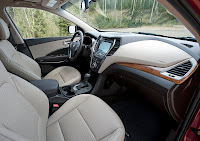
Hyundai Santa Fe Sport


  •  Hyundai Santa Fe Sport, 2013

The all-new third-generation Hyundai Santa Fe launches in two flavors, a five-passenger model similar in size to the previous generation Santa Fe, and a longer wheelbase three-row, seven-passenger model. Both are capable crossovers built for todays family, with flexible seating and cargo, strong performance courtesy of dramatic weight savings (266 lbs. lighter than the 2012 model) and advanced safety technologies. Santa Fe showcases the brands cutting-edge capabilities through its bold design, impressive fuel economy and a host of features to delight drivers and passengers with high expectations for functionality and comfort. The all-new 2013 five-passenger Hyundai Santa Fe Sport began arriving at dealerships in August 2012, with the long wheelbase Santa Fe set to arrive in January 2013.

NO LINES STANDING STILL
The "Fluidic Sculpture" exterior of the Santa Fe crossover family invokes the impression of irrepressible motion through a new design concept called Storm Edge, which captures the strong and dynamic images created by nature during the formation of a storm. To create the illusion of constant motion, Hyundai designers use a three-bar hexagonal front grille, LED headlight accents, low stance, rising beltline, roof spoiler and wraparound taillights. These cues let people know immediately that Santa Fe is a Hyundai. Design elements also include standard chrome grille and door handle accents and bodycolor mirrors. In addition, 19-inch wheels and a twin-tip chrome exhaust are standard on Hyundai Santa Fe Sport 2.0T.

The Hyundai designers crafted both Santa Fe models together, with the signature differentiating element being the side view daylight opening (side window shape) - the longer Santa Fe features a shape that highlights the increased passenger and cargo room behind the second row seat. Santa Fe also has its own bodyside character lines from the B-pillar back, grille design, 18-inch alloy wheels, dual exhaust tips and a flush-mounted tow hitch design.

Both Santa Fe models feature the same flowing interior look, designed for passenger functionality and comfort. From the heated rear seats and available eight-way power driver seat, to a standard 40:20:40 folding rear seat back, both boast flexibility and a pleasant cabin for all. Also new for 2013 - and standard on all Santa Fe models with cloth seating - is a YES Essentials seat fabric treatment that provides soil-resistant, anti-odor and anti-static properties for added longevity and livability. Special care and attention went into other interior details, such as an optional panoramic sunroof, which allows more natural light into the cabin, and premium window switch trim. Available on 2.4-liter models and standard on Turbo models, is a push-button starter with proximity key and an electrochromatic gauge cluster color LCD screen. A heated steering wheel and sliding second row seats are optional first-class touches on Hyundai Santa Fe Sport. The heated steering wheel is also optional on the LWB Santa Fe.

The three-row Santa Fe increases second-row legroom by 1.9 inches and cargo capacity 5.6 cubic feet and houses second-row HVAC controls and vents to increase family comfort, while also offering a standard 50:50 split folding third-row bench seat with 31.5 inches of legroom.

CHOICE OF THREE POWERFUL, FUEL EFFICIENT ENGINES
Hyundai Santa Fe Sport buyers have the choice of a 2.4-liter Gasoline Direct Engine (GDI) engine or a turbocharged 2.0-liter GDI engine. Both engines have been well tested in the Hyundai Sonata and provide more than enough power for city or highway driving and have the ability to tow up to 3,500 pounds. With 190 horsepower and 181 lb-ft of torque, Hyundai Santa Fe Sport 2.4 still manages outstanding fuel economy of 22 city and 33 highway (EPA estimated). This powertrain truly combines power and fuel efficiency with ined driving dynamics. The higher output 2.0-liter turbocharged engine found under the hood of Hyundai Santa Fe Sport 2.0T increases horsepower to 264, while also delivering excellent fuel economy. The LWB Santa Fe is powered by the highly acclaimed 3.3-liter GDI V6 engine, which is also found in the Hyundai Azera.

THETA II GDI 2.4-LITER ENGINE
The Theta II GDI 2.4-liter four-cylinder engine with a GDI fuel delivery system contributes to improved fuel efficiency and lower emissions in Hyundai Santa Fe Sport. This shorter, more direct path of fuel delivery, allows for greater control of the fuel mixture at the optimum moment, thus improving efficiency. The fuel is injected by a camshaft-driven, high pressure pump that operates at pressures up to 2,175 psi. Direct injection also utilizes a higher-than-normal 11.3 compression ratio for increased power. When compared to naturally-aspirated engines, this power plant delivers best-in-class four-cylinder horsepower, best-in-class torque and best-in-class power-to-weight ratio. The high-tech, all-aluminum, 16-valve engine also features Dual Continuously Variable Valve Timing (DCVVT) and a Variable Induction System (VIS) for better engine breathing.

2.0-LITER THETA II TURBOCHARGED ENGINE
The new Santa Fe Sport 2.0T is the first Hyundai crossover to have both GDI technology and a turbocharger. This option provides more horsepower than many of the V6 competitors, yet delivers gas mileage similar to competitors four-cylinder models.

The 2.0-liter turbocharged GDI four-cylinder engine in the 2013 Santa Fe Sport 2.0T produces 264 horsepower and 269 lb-ft of torque with regular fuel. Hyundais 2.0-liter Theta II turbocharged engine features a twin-scroll turbocharger that when combined with the GDI system, results in instantaneous power delivery. The Ford Edge, like the Hyundai Santa Fe Sport 2.0T, uses a turbocharged GDI four-cylinder engine. However, the Hyundai Santa Fe Sport 2.0T has upped the ante with 24 more horsepower, a better power-to-weight ratio and higher fuel economy numbers.

Twin-scroll turbocharger designs have two exhaust gas inlets that are divided by split walls inside the turbine housing with both gas passages controlled by a waste-gate. A twin-scroll turbo recovers even more energy from the exhaust than a single-scroll turbocharger, thanks to a divided manifold. The twin-scroll design separates the cylinders whose exhaust gas pulses interfere with each other, resulting in improved pressure distribution in the exhaust ports and a more efficient delivery of exhaust gas energy to the turbochargers turbine.

For example, at the start of the intake stroke of cylinder one and when both the intake and exhaust valves are open (valve overlap period), cylinder three already begins its exhaust stroke with an open exhaust valve. If the exhaust passages of cylinder one and three were connected, the exhaust gas pulse from cylinder three would increase the back pressure of cylinder one - reducing the induction of fresh air and increasing the amount of hot residual gases inside the cylinder. However, with the twin-scroll turbocharger setup, this interference is minimized. The result of this superior scavenging effect from a twin-scroll design leads to several advantages over the traditional, single-scroll turbocharging systems:
  •     Better pressure distribution in the exhaust ports
  •     More efficient delivery of exhaust gas energy to the turbochargers turbine
  •     Greater valve overlap for improved quality/quantity of air charge entering each cylinder
  •     Ensures each cylinder is packed with a denser and purer air charge
  •     Improved combustion efficiency
  •     Low engine-speed efficiency
  •     Kinetic exhaust gas energy is not wasted or trapped
  •     Cooler cylinder temperatures
  •     Lower exhaust temperatures
  •     Leaner air/fuel ratio

The Hyundai Santa Fe Sport 2.0Ts twin-scroll turbo has superior handling of exhaust gas separation at the turbine, leading to improved low-end torque and faster transient torque response.

Two key features of Hyundais twin-scroll turbocharger setup are as follows:
  • The stainless steel exhaust manifold and the twin-scroll turbine housing are cast in a patent-pending one-piece design
  • The waste-gate for the turbocharger uses a motor-driven electrical controller instead of being mechanically controlled

Thanks to the integrated stainless-steel turbine housing with exhaust manifold, not only is the weight and cost of the casting dramatically reduced, but the durability of the turbine housing also improves. In addition, heat energy recovery and turbo efficiency significantly improve based on the fact that a traditional two-piece design effectively insulates some of the heat energy at the joint/gasket area.

By adapting the motor-driven electrical waste-gate, the boost pressure is precisely controlled. The back pressure is reduced when turbo boost is not necessary by opening the waste-gate, which improves fuel efficiency. During cold starts, the waste-gate remains open, which results in faster catalyst light-off for reduced exhaust emissions.

Direct injection also utilizes a 9.5 compression ratio in this engine, while achieving a best-in-class 132 horsepower-per-liter.

LAMBDA II 3.3-LITER GDI V6 ENGINE
Shoppers looking for a V6 engine will find that the long wheelbase Santa Fe suits their needs in terms of drivability and fuel economy. The Santa Fes Lambda II 3.3-liter GDI also has a high-pressure direct injection system (over 2,200 psi), which dramatically increases power and torque, while reducing fuel consumption and emissions. This system eliminates the need for a large displacement V6 engine and increases the compression ratio for greater thermal efficiency and output. Santa Fes V6 is perfect for towing small boats or weekend toys.

SIX-SPEED AUTsayaATIC TRANSMISSION
All the engines are mated to Hyundais six-speed automatic transmission with SHIFTRONIC® manual control. This transmission offers smooth shifts and a wide ratio spread that suits the engines characteristics. An automatic transmission warmer is included to keep the transmission oil at its optimal temperature, which improves real-world fuel economy.

All models have an Active ECO System that modifies engine and transmission control to smooth out throttle response and increase real-world fuel economy.

DO ANYTHING CAPABILITY WITH ACTIVE CORNERING CONTROL AWD
Santa Fe customers will feel the benefits of the optional Active Cornering Control All-Wheel-Drive (ACC AWD) system that cooperatively controls engine torque and braking in conjunction with the Vehicle Stability Management System. This system can anticipate traction requirements and deliver additional stability through braking via continuous monitoring of driving conditions compared with other AWD systems, which can only react to conditions after they occur. All AWD Santa Fes access an intelligent control unit that continuously analyzes data from the vehicle controller, and through a multi-clutch plate distributes torque to any single wheel at a time. The coupling system is fully controllable via an electro-hydraulic actuation system. Braking force can also be sent to any single wheel at a time via the software. These processes are known as torque vectoring and torque braking. All this analysis is completely transparent to the driver.

Drivers of the ACC AWD Santa Fe realize the following advantages:
    Improved lateral stability while cornering
    Removal of unintended over- and under-steer by reducing unwanted traction to the front and rear axle
    High thermal capacity, which helps prevent overheating during hill climbs and trailer towing

In addition, greater efficiency is achieved through the intelligent control electronics that provide the torque needed for enhanced traction in a variety of driving situations. As a result, lower fuel consumption and reduced emissions are achieved. The electronic components are also optimally sized for minimal energy usage. This intelligent system allows for even more driver control.

The 2013 Santa Fe models feature Hyundais Hillstart Assist Control (HAC) and Downhill Brake Control (DBC) to maximize control on steep hills. HAC minimizes rolling backwards on steep ascents while DBC helps the driver maintain vehicle control and speed on steep downhill descents. By selecting the DBC switch, the Hydro-Electronic Control unit manages the wheel speed sensors, steering angle sensor and acceleration sensor to maintain control and speed on steep declines without having to use the brake.

FUN-TO-DRIVE CUV DRIVING DYNAMICS
For enhanced ride performance, Santa Fe employs a compact and light MacPherson strut front suspension and a fully independent in-wheel multi-link rear suspension for improved cabin volume and ride quality. Hyundai Santa Fe Sport rides on 17-inch wheels and P235/65 R17 tires. Hyundai Santa Fe Sport 2.0T sits on 19-inch wheels with P235/55R19 lower profile tires. The front suspension has a 26.5 mm hollow stabilizer bar to save weight. The rear suspension uses a 21 mm solid stabilizer bar in the front wheel drive and 19 mm solid stabilizer bar in all-wheel drive models. The larger Santa Fe sits on 18- or 19-inch wheels.

Behind the wheel, drivers benefit from Hyundais all-new Driver Selectable Steering Mode (DSSM), with three operating modes - Comfort, Normal and Sport. This innovative system allows drivers to adapt Santa Fes steering characteristics to varying driving perences and road conditions. Comfort mode is ideal for city and parking environments, offering the greatest ease of steering with a ~10 percent decrease in steering effort from Normal mode. Normal mode is ideal for a mix of driving conditions. Meanwhile, Sport Mode is optimized for higher-speed freeways or winding roads and increases steering effort by ~10 percent from Normal mode. The DSSM not only adjusts power assistance levels in each mode, but also adjusts on-center build-up feel and steering build-up curves throughout the steering range, for a very natural and progressive feel. Steering damping characteristics, active return and friction levels have also been optimized in the new Santa Fe. Even more impressive is the fact that Hyundai engineers have successfully tuned Hyundai Santa Fe Sports class-leading 35.76 ft. turning circle for enhanced maneuverability. The LWB Santa Fes turning circle is 36.68 ft.

SANTA FE CABIN SPACE ADVANTAGE
The sleek design of Santa Fe, combined with Hyundais expertise in interior packaging, delivers a great presence on the road while improving functionality and convenience. The spacious cabin has more shoulder room than the previous generation and the Toyota RAV4 and Ford Edge. The three-row, seven-passenger Santa Fe also has more second row leg room than Nissan Murano, Toyota Highlander and the full-size Chevrolet Traverse. Seating utility is also improved due to a standard 40:20:40 folding rear seat back. This seat back is perfect for seating five passengers comfortably or accommodating four passengers, plus long items like skis, golf clubs, snowboards or surfboards. Fold down two seats to seat three people and hold larger packages or fold all rear seats to maximize cargo space. Customers will also discover Hyundai Santa Fe Sport has more cargo volume than Chevrolet Equinox and Ford Edge.

The LWB Santa Fe models come standard with three-row seating with standard second row bench seats (7-passenger) or optional second row captains chairs (6-passenger). The LWB Santa Fe also features a power liftgate for added convenience.

Santa Fe includes a number of convenient, standard stowage and storage features, including an overhead console sunglass holder, two front and two rear seat cupholders, door bottle holders, cooled glovebox, enlarged central storage console, front storage bin, front seat- back pockets and an innovative cargo under tray and floor board storage. The Hyundai Santa Fe Sport also features sliding and reclining second row seats.

Dual-zone climate controls ensure a comfortable environment for all occupants during long journeys. The dual-zone climate controls also incorporate an automatic defogging system, which detects humidity levels using a sensor and removes it from the windshield. Another premium feature is a CleanAir Ionizer that automatically cleans the air when the heater or air conditioner is running.

OVERALL DIMENSIONS
Hyundai Santa Fe Sport rides on a 106.3-inch wheelbase, with an overall length of 184.6 inches, height of 66.1 inches and width of 74.0 inches. The larger Santa Fe rides on a 110.2-inch wheelbase, which is 3.9 inches longer than the Hyundai Santa Fe Sports wheelbase. Its overall length is 193.1 inches compared with Hyundai Santa Fe Sports length of 184.6 inches. The 74.2-inch width is slightly wider than Hyundai Santa Fe Sport. The LWB Santa Fes overall height is 66.5 inches, which is 0.4 inches higher than Santa Fe Sport.

Ultimately, the long wheelbase for both models allows for compact crossover efficiency with mid-size crossover comfort. An example of this is found in the long second row seat track, delivering more second row legroom. The three-row Santa Fes cargo volume is 41.0 cubic feet with the third row seats folded.

IMPROVED RIGIDITY AND ULTRA-HIGH STRENGTH TENSILE STEEL
The all-new architecture incorporates a new design that increases high tensile steel application ratio to 37.7 percent (up from 7.8% on previous model) to not only improve torsional rigidity by 16 percent, but also improve vehicle weight and collision energy management. High-strength steel also allows the suspension to work optimally and reduce weight. In addition, anti-corrosion steel was applied to 70 percent of outer frame and floor structure.

New hot stamping and roll forming methods have also been applied to impact members, which provide added strength, reduces the number of body parts and makes the architecture lighter. The amount of structural adhesives has also been increased significantly for improved body rigidity, crashworthiness and durability.

WORLD-CLASS WEIGHT EFFICIENCY
World-class weight efficiency is an essential part of all Hyundai models and the new Santa Fe models hit their target. The new two-row, five-passenger 2013 Santa Fe Sport 2.4L FWD sheds a remarkable 266 pounds compared to the previous generation 2012 Santa Fe four-cylinder, while the Hyundai Santa Fe Sport 2.0T cuts a whopping 333 pounds when compared to the 2012 Santa Fe V6 FWD it replaces. These reductions are the largest weight losses from generation to generation for any vehicle in Hyundai Motor Companys history, and demonstrate a key enabler of Hyundais industry-leading fuel efficiency status.

The Hyundai Santa Fe Sport 2.4L FWD is also 318 pounds lighter than the Chevrolet Equinox and 56 pounds less than the segment-below (much smaller) Ford Escape. Even compared to premium brand vehicles like the 2012 Audi Q5 2.0 TFSI Quattro, which uses significant amounts of aluminum and magnesium in its architecture for weight savings, the 2013 Hyundai Santa Fe Sport 2.0T AWD tips the scales 384 pounds lighter. Taking weight out of vehicles pays dividends in fuel economy and performance. This priority on weight efficiency allows Santa Fe deliver carlike handling, outstanding acceleration and fuel efficiency. Curb weight for a FWD three-row Santa Fe is 3,869 pounds, with AWD models weighing 4,012 pounds.

NEW ADVANCED STANDARD SAFETY TECHNOLOGIES: PART OF HYUNDAIS ASSURANCE CsayaMITMENT
All FWD models have a standard Vehicle Stability Management (VSM) system, which optimally manages Electronic Stability Control (ESC) and the Motor-Driven electric Power Steering (MDPS). VSM works to control two effects. The first is when a driver accelerates or brakes on a split-mu surface (slippery on one side, dry pavement on the other) and the vehicle wants to pull in one direction. VSM detects this condition and sends a signal to the MDPS to apply steering assist. VSM counters the pull and automatically provides eight Newton meters of counter-steering. VSM reacts the same way during sudden lane changes or fast cornering. AWD drive models integrate torque and brake vectoring.

Santa Fe features seven airbags, including drivers knee airbag and side curtain airbags with rollover sensors. When the sensors detect a potential rollover, the control module triggers the head-curtain side airbags and safety belt pre-tensioners to help protect passengers against serious injury.

Santa Fe also features a state-of-the-art braking package. The package includes four-wheel disc brakes (12.6 inch front and 11.9 inch rear), an Anti-Lock Braking System (ABS) including Brake Assist providing maximum braking force when a panic stop is detected, and Electronic Brake-force Distribution (EBD) to automatically adjust the braking force to front and rear axles based on vehicle loading conditions. Additionally, Santa Fe offers impressive passive safety features including a Lower Anchors and Tethers for Children (LATCH) system for childrens seats and three-point seatbelts for all positions.

THIRD-GENERATION NAVIGATION AND AUDIO TECHNOLOGY
All Santa Fe models offer an optional multifunction eight-inch touch-screen display with navigation. This third-generation display features a simpler user interface, enhanced voice recognition commands and improved navigation screens. The system is more intuitive to use for commonly used tasks. Simple pop up messages now appear to help pair a phone. The voice recognition software understands street addresses and cities all in one sentence. The route screens display speed limits and details the next three maneuvers. One or two button pushes now complete most functions.

HD Radio technology is also integrated into all Santa Fe displays. An HD Radio icon on the display appears next to the channel frequency to notify the user this station is broadcasting in HD.

All models are available with four audio systems. Standard is an AM/FM/Satellite Radio/CD/MP3 audio system with six-speakers and iPod®/USB/auxiliary input jacks and wireless audio streaming. The upgrade audio system boasts a 4.3-inch full color LCD touchscreen with HD Radio technology and rear view camera. The third system consists of the Gen 3.0 Navigation unit and rearview camera paired with either a Dimension 10-speaker premium audio system or the Infinity 550-watt, Logic 7 audio system with 12 speakers, including an eight-inch subwoofer. A SiriusXM Satellite Radio interface is integrated into each head unit and features channel logos and SiriusXM Data services. A Bluetooth hands-free phone system with voice recognition, address book download and audio streaming is also standard. Blue Link™ turn-by-turn navigation is standard on all Santa Fe models.