 get no intent how itll docket when it goes on understanding, but we revel imagining the day when we signaling vision the CTS-V Diversion Wagon on the streets. Since thats ease a construction off, for now well be paradisial deed our close fix from Cadillac Arrangement Manager Pol Histrion, who takes us on a calling around the hottest auto that isnt named "E63." Perhaps the most valuable entity nearly it is that it gives us different features to expose roughly too the engine - not that well eer real lecture virtually them, but at littlest we know theyre there. Uprise the omit for the walk-around.
Showing posts with label sport. Show all posts
Showing posts with label sport. Show all posts
Tuesday, March 11, 2014
Cadillac CTS V Sport Wagon
get no intent how itll docket when it goes on understanding, but we revel imagining the day when we signaling vision the CTS-V Diversion Wagon on the streets. Since thats ease a construction off, for now well be paradisial deed our close fix from Cadillac Arrangement Manager Pol Histrion, who takes us on a calling around the hottest auto that isnt named "E63." Perhaps the most valuable entity nearly it is that it gives us different features to expose roughly too the engine - not that well eer real lecture virtually them, but at littlest we know theyre there. Uprise the omit for the walk-around.

Monday, March 3, 2014
Hyundai Santa Fe Sport


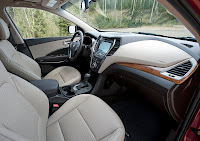

- Hyundai Santa Fe Sport, 2013
The all-new third-generation Hyundai Santa Fe launches in two flavors, a five-passenger model similar in size to the previous generation Santa Fe, and a longer wheelbase three-row, seven-passenger model. Both are capable crossovers built for todays family, with flexible seating and cargo, strong performance courtesy of dramatic weight savings (266 lbs. lighter than the 2012 model) and advanced safety technologies. Santa Fe showcases the brands cutting-edge capabilities through its bold design, impressive fuel economy and a host of features to delight drivers and passengers with high expectations for functionality and comfort. The all-new 2013 five-passenger Hyundai Santa Fe Sport began arriving at dealerships in August 2012, with the long wheelbase Santa Fe set to arrive in January 2013.
NO LINES STANDING STILL
The "Fluidic Sculpture" exterior of the Santa Fe crossover family invokes the impression of irrepressible motion through a new design concept called Storm Edge, which captures the strong and dynamic images created by nature during the formation of a storm. To create the illusion of constant motion, Hyundai designers use a three-bar hexagonal front grille, LED headlight accents, low stance, rising beltline, roof spoiler and wraparound taillights. These cues let people know immediately that Santa Fe is a Hyundai. Design elements also include standard chrome grille and door handle accents and bodycolor mirrors. In addition, 19-inch wheels and a twin-tip chrome exhaust are standard on Hyundai Santa Fe Sport 2.0T.
The Hyundai designers crafted both Santa Fe models together, with the signature differentiating element being the side view daylight opening (side window shape) - the longer Santa Fe features a shape that highlights the increased passenger and cargo room behind the second row seat. Santa Fe also has its own bodyside character lines from the B-pillar back, grille design, 18-inch alloy wheels, dual exhaust tips and a flush-mounted tow hitch design.
Both Santa Fe models feature the same flowing interior look, designed for passenger functionality and comfort. From the heated rear seats and available eight-way power driver seat, to a standard 40:20:40 folding rear seat back, both boast flexibility and a pleasant cabin for all. Also new for 2013 - and standard on all Santa Fe models with cloth seating - is a YES Essentials seat fabric treatment that provides soil-resistant, anti-odor and anti-static properties for added longevity and livability. Special care and attention went into other interior details, such as an optional panoramic sunroof, which allows more natural light into the cabin, and premium window switch trim. Available on 2.4-liter models and standard on Turbo models, is a push-button starter with proximity key and an electrochromatic gauge cluster color LCD screen. A heated steering wheel and sliding second row seats are optional first-class touches on Hyundai Santa Fe Sport. The heated steering wheel is also optional on the LWB Santa Fe.
The three-row Santa Fe increases second-row legroom by 1.9 inches and cargo capacity 5.6 cubic feet and houses second-row HVAC controls and vents to increase family comfort, while also offering a standard 50:50 split folding third-row bench seat with 31.5 inches of legroom.
CHOICE OF THREE POWERFUL, FUEL EFFICIENT ENGINES
Hyundai Santa Fe Sport buyers have the choice of a 2.4-liter Gasoline Direct Engine (GDI) engine or a turbocharged 2.0-liter GDI engine. Both engines have been well tested in the Hyundai Sonata and provide more than enough power for city or highway driving and have the ability to tow up to 3,500 pounds. With 190 horsepower and 181 lb-ft of torque, Hyundai Santa Fe Sport 2.4 still manages outstanding fuel economy of 22 city and 33 highway (EPA estimated). This powertrain truly combines power and fuel efficiency with ined driving dynamics. The higher output 2.0-liter turbocharged engine found under the hood of Hyundai Santa Fe Sport 2.0T increases horsepower to 264, while also delivering excellent fuel economy. The LWB Santa Fe is powered by the highly acclaimed 3.3-liter GDI V6 engine, which is also found in the Hyundai Azera.
THETA II GDI 2.4-LITER ENGINE
The Theta II GDI 2.4-liter four-cylinder engine with a GDI fuel delivery system contributes to improved fuel efficiency and lower emissions in Hyundai Santa Fe Sport. This shorter, more direct path of fuel delivery, allows for greater control of the fuel mixture at the optimum moment, thus improving efficiency. The fuel is injected by a camshaft-driven, high pressure pump that operates at pressures up to 2,175 psi. Direct injection also utilizes a higher-than-normal 11.3 compression ratio for increased power. When compared to naturally-aspirated engines, this power plant delivers best-in-class four-cylinder horsepower, best-in-class torque and best-in-class power-to-weight ratio. The high-tech, all-aluminum, 16-valve engine also features Dual Continuously Variable Valve Timing (DCVVT) and a Variable Induction System (VIS) for better engine breathing.
2.0-LITER THETA II TURBOCHARGED ENGINE
The new Santa Fe Sport 2.0T is the first Hyundai crossover to have both GDI technology and a turbocharger. This option provides more horsepower than many of the V6 competitors, yet delivers gas mileage similar to competitors four-cylinder models.
The 2.0-liter turbocharged GDI four-cylinder engine in the 2013 Santa Fe Sport 2.0T produces 264 horsepower and 269 lb-ft of torque with regular fuel. Hyundais 2.0-liter Theta II turbocharged engine features a twin-scroll turbocharger that when combined with the GDI system, results in instantaneous power delivery. The Ford Edge, like the Hyundai Santa Fe Sport 2.0T, uses a turbocharged GDI four-cylinder engine. However, the Hyundai Santa Fe Sport 2.0T has upped the ante with 24 more horsepower, a better power-to-weight ratio and higher fuel economy numbers.
Twin-scroll turbocharger designs have two exhaust gas inlets that are divided by split walls inside the turbine housing with both gas passages controlled by a waste-gate. A twin-scroll turbo recovers even more energy from the exhaust than a single-scroll turbocharger, thanks to a divided manifold. The twin-scroll design separates the cylinders whose exhaust gas pulses interfere with each other, resulting in improved pressure distribution in the exhaust ports and a more efficient delivery of exhaust gas energy to the turbochargers turbine.
For example, at the start of the intake stroke of cylinder one and when both the intake and exhaust valves are open (valve overlap period), cylinder three already begins its exhaust stroke with an open exhaust valve. If the exhaust passages of cylinder one and three were connected, the exhaust gas pulse from cylinder three would increase the back pressure of cylinder one - reducing the induction of fresh air and increasing the amount of hot residual gases inside the cylinder. However, with the twin-scroll turbocharger setup, this interference is minimized. The result of this superior scavenging effect from a twin-scroll design leads to several advantages over the traditional, single-scroll turbocharging systems:
- Better pressure distribution in the exhaust ports
- More efficient delivery of exhaust gas energy to the turbochargers turbine
- Greater valve overlap for improved quality/quantity of air charge entering each cylinder
- Ensures each cylinder is packed with a denser and purer air charge
- Improved combustion efficiency
- Low engine-speed efficiency
- Kinetic exhaust gas energy is not wasted or trapped
- Cooler cylinder temperatures
- Lower exhaust temperatures
- Leaner air/fuel ratio
The Hyundai Santa Fe Sport 2.0Ts twin-scroll turbo has superior handling of exhaust gas separation at the turbine, leading to improved low-end torque and faster transient torque response.
Two key features of Hyundais twin-scroll turbocharger setup are as follows:
- The stainless steel exhaust manifold and the twin-scroll turbine housing are cast in a patent-pending one-piece design
- The waste-gate for the turbocharger uses a motor-driven electrical controller instead of being mechanically controlled
Thanks to the integrated stainless-steel turbine housing with exhaust manifold, not only is the weight and cost of the casting dramatically reduced, but the durability of the turbine housing also improves. In addition, heat energy recovery and turbo efficiency significantly improve based on the fact that a traditional two-piece design effectively insulates some of the heat energy at the joint/gasket area.
By adapting the motor-driven electrical waste-gate, the boost pressure is precisely controlled. The back pressure is reduced when turbo boost is not necessary by opening the waste-gate, which improves fuel efficiency. During cold starts, the waste-gate remains open, which results in faster catalyst light-off for reduced exhaust emissions.
Direct injection also utilizes a 9.5 compression ratio in this engine, while achieving a best-in-class 132 horsepower-per-liter.
LAMBDA II 3.3-LITER GDI V6 ENGINE
Shoppers looking for a V6 engine will find that the long wheelbase Santa Fe suits their needs in terms of drivability and fuel economy. The Santa Fes Lambda II 3.3-liter GDI also has a high-pressure direct injection system (over 2,200 psi), which dramatically increases power and torque, while reducing fuel consumption and emissions. This system eliminates the need for a large displacement V6 engine and increases the compression ratio for greater thermal efficiency and output. Santa Fes V6 is perfect for towing small boats or weekend toys.
SIX-SPEED AUTsayaATIC TRANSMISSION
All the engines are mated to Hyundais six-speed automatic transmission with SHIFTRONIC® manual control. This transmission offers smooth shifts and a wide ratio spread that suits the engines characteristics. An automatic transmission warmer is included to keep the transmission oil at its optimal temperature, which improves real-world fuel economy.
All models have an Active ECO System that modifies engine and transmission control to smooth out throttle response and increase real-world fuel economy.
DO ANYTHING CAPABILITY WITH ACTIVE CORNERING CONTROL AWD
Santa Fe customers will feel the benefits of the optional Active Cornering Control All-Wheel-Drive (ACC AWD) system that cooperatively controls engine torque and braking in conjunction with the Vehicle Stability Management System. This system can anticipate traction requirements and deliver additional stability through braking via continuous monitoring of driving conditions compared with other AWD systems, which can only react to conditions after they occur. All AWD Santa Fes access an intelligent control unit that continuously analyzes data from the vehicle controller, and through a multi-clutch plate distributes torque to any single wheel at a time. The coupling system is fully controllable via an electro-hydraulic actuation system. Braking force can also be sent to any single wheel at a time via the software. These processes are known as torque vectoring and torque braking. All this analysis is completely transparent to the driver.
Drivers of the ACC AWD Santa Fe realize the following advantages:
Improved lateral stability while cornering
Removal of unintended over- and under-steer by reducing unwanted traction to the front and rear axle
High thermal capacity, which helps prevent overheating during hill climbs and trailer towing
In addition, greater efficiency is achieved through the intelligent control electronics that provide the torque needed for enhanced traction in a variety of driving situations. As a result, lower fuel consumption and reduced emissions are achieved. The electronic components are also optimally sized for minimal energy usage. This intelligent system allows for even more driver control.
The 2013 Santa Fe models feature Hyundais Hillstart Assist Control (HAC) and Downhill Brake Control (DBC) to maximize control on steep hills. HAC minimizes rolling backwards on steep ascents while DBC helps the driver maintain vehicle control and speed on steep downhill descents. By selecting the DBC switch, the Hydro-Electronic Control unit manages the wheel speed sensors, steering angle sensor and acceleration sensor to maintain control and speed on steep declines without having to use the brake.
FUN-TO-DRIVE CUV DRIVING DYNAMICS
For enhanced ride performance, Santa Fe employs a compact and light MacPherson strut front suspension and a fully independent in-wheel multi-link rear suspension for improved cabin volume and ride quality. Hyundai Santa Fe Sport rides on 17-inch wheels and P235/65 R17 tires. Hyundai Santa Fe Sport 2.0T sits on 19-inch wheels with P235/55R19 lower profile tires. The front suspension has a 26.5 mm hollow stabilizer bar to save weight. The rear suspension uses a 21 mm solid stabilizer bar in the front wheel drive and 19 mm solid stabilizer bar in all-wheel drive models. The larger Santa Fe sits on 18- or 19-inch wheels.
Behind the wheel, drivers benefit from Hyundais all-new Driver Selectable Steering Mode (DSSM), with three operating modes - Comfort, Normal and Sport. This innovative system allows drivers to adapt Santa Fes steering characteristics to varying driving perences and road conditions. Comfort mode is ideal for city and parking environments, offering the greatest ease of steering with a ~10 percent decrease in steering effort from Normal mode. Normal mode is ideal for a mix of driving conditions. Meanwhile, Sport Mode is optimized for higher-speed freeways or winding roads and increases steering effort by ~10 percent from Normal mode. The DSSM not only adjusts power assistance levels in each mode, but also adjusts on-center build-up feel and steering build-up curves throughout the steering range, for a very natural and progressive feel. Steering damping characteristics, active return and friction levels have also been optimized in the new Santa Fe. Even more impressive is the fact that Hyundai engineers have successfully tuned Hyundai Santa Fe Sports class-leading 35.76 ft. turning circle for enhanced maneuverability. The LWB Santa Fes turning circle is 36.68 ft.
SANTA FE CABIN SPACE ADVANTAGE
The sleek design of Santa Fe, combined with Hyundais expertise in interior packaging, delivers a great presence on the road while improving functionality and convenience. The spacious cabin has more shoulder room than the previous generation and the Toyota RAV4 and Ford Edge. The three-row, seven-passenger Santa Fe also has more second row leg room than Nissan Murano, Toyota Highlander and the full-size Chevrolet Traverse. Seating utility is also improved due to a standard 40:20:40 folding rear seat back. This seat back is perfect for seating five passengers comfortably or accommodating four passengers, plus long items like skis, golf clubs, snowboards or surfboards. Fold down two seats to seat three people and hold larger packages or fold all rear seats to maximize cargo space. Customers will also discover Hyundai Santa Fe Sport has more cargo volume than Chevrolet Equinox and Ford Edge.
The LWB Santa Fe models come standard with three-row seating with standard second row bench seats (7-passenger) or optional second row captains chairs (6-passenger). The LWB Santa Fe also features a power liftgate for added convenience.
Santa Fe includes a number of convenient, standard stowage and storage features, including an overhead console sunglass holder, two front and two rear seat cupholders, door bottle holders, cooled glovebox, enlarged central storage console, front storage bin, front seat- back pockets and an innovative cargo under tray and floor board storage. The Hyundai Santa Fe Sport also features sliding and reclining second row seats.
Dual-zone climate controls ensure a comfortable environment for all occupants during long journeys. The dual-zone climate controls also incorporate an automatic defogging system, which detects humidity levels using a sensor and removes it from the windshield. Another premium feature is a CleanAir Ionizer that automatically cleans the air when the heater or air conditioner is running.
OVERALL DIMENSIONS
Hyundai Santa Fe Sport rides on a 106.3-inch wheelbase, with an overall length of 184.6 inches, height of 66.1 inches and width of 74.0 inches. The larger Santa Fe rides on a 110.2-inch wheelbase, which is 3.9 inches longer than the Hyundai Santa Fe Sports wheelbase. Its overall length is 193.1 inches compared with Hyundai Santa Fe Sports length of 184.6 inches. The 74.2-inch width is slightly wider than Hyundai Santa Fe Sport. The LWB Santa Fes overall height is 66.5 inches, which is 0.4 inches higher than Santa Fe Sport.
Ultimately, the long wheelbase for both models allows for compact crossover efficiency with mid-size crossover comfort. An example of this is found in the long second row seat track, delivering more second row legroom. The three-row Santa Fes cargo volume is 41.0 cubic feet with the third row seats folded.
IMPROVED RIGIDITY AND ULTRA-HIGH STRENGTH TENSILE STEEL
The all-new architecture incorporates a new design that increases high tensile steel application ratio to 37.7 percent (up from 7.8% on previous model) to not only improve torsional rigidity by 16 percent, but also improve vehicle weight and collision energy management. High-strength steel also allows the suspension to work optimally and reduce weight. In addition, anti-corrosion steel was applied to 70 percent of outer frame and floor structure.
New hot stamping and roll forming methods have also been applied to impact members, which provide added strength, reduces the number of body parts and makes the architecture lighter. The amount of structural adhesives has also been increased significantly for improved body rigidity, crashworthiness and durability.
WORLD-CLASS WEIGHT EFFICIENCY
World-class weight efficiency is an essential part of all Hyundai models and the new Santa Fe models hit their target. The new two-row, five-passenger 2013 Santa Fe Sport 2.4L FWD sheds a remarkable 266 pounds compared to the previous generation 2012 Santa Fe four-cylinder, while the Hyundai Santa Fe Sport 2.0T cuts a whopping 333 pounds when compared to the 2012 Santa Fe V6 FWD it replaces. These reductions are the largest weight losses from generation to generation for any vehicle in Hyundai Motor Companys history, and demonstrate a key enabler of Hyundais industry-leading fuel efficiency status.
The Hyundai Santa Fe Sport 2.4L FWD is also 318 pounds lighter than the Chevrolet Equinox and 56 pounds less than the segment-below (much smaller) Ford Escape. Even compared to premium brand vehicles like the 2012 Audi Q5 2.0 TFSI Quattro, which uses significant amounts of aluminum and magnesium in its architecture for weight savings, the 2013 Hyundai Santa Fe Sport 2.0T AWD tips the scales 384 pounds lighter. Taking weight out of vehicles pays dividends in fuel economy and performance. This priority on weight efficiency allows Santa Fe deliver carlike handling, outstanding acceleration and fuel efficiency. Curb weight for a FWD three-row Santa Fe is 3,869 pounds, with AWD models weighing 4,012 pounds.
NEW ADVANCED STANDARD SAFETY TECHNOLOGIES: PART OF HYUNDAIS ASSURANCE CsayaMITMENT
All FWD models have a standard Vehicle Stability Management (VSM) system, which optimally manages Electronic Stability Control (ESC) and the Motor-Driven electric Power Steering (MDPS). VSM works to control two effects. The first is when a driver accelerates or brakes on a split-mu surface (slippery on one side, dry pavement on the other) and the vehicle wants to pull in one direction. VSM detects this condition and sends a signal to the MDPS to apply steering assist. VSM counters the pull and automatically provides eight Newton meters of counter-steering. VSM reacts the same way during sudden lane changes or fast cornering. AWD drive models integrate torque and brake vectoring.
Santa Fe features seven airbags, including drivers knee airbag and side curtain airbags with rollover sensors. When the sensors detect a potential rollover, the control module triggers the head-curtain side airbags and safety belt pre-tensioners to help protect passengers against serious injury.
Santa Fe also features a state-of-the-art braking package. The package includes four-wheel disc brakes (12.6 inch front and 11.9 inch rear), an Anti-Lock Braking System (ABS) including Brake Assist providing maximum braking force when a panic stop is detected, and Electronic Brake-force Distribution (EBD) to automatically adjust the braking force to front and rear axles based on vehicle loading conditions. Additionally, Santa Fe offers impressive passive safety features including a Lower Anchors and Tethers for Children (LATCH) system for childrens seats and three-point seatbelts for all positions.
THIRD-GENERATION NAVIGATION AND AUDIO TECHNOLOGY
All Santa Fe models offer an optional multifunction eight-inch touch-screen display with navigation. This third-generation display features a simpler user interface, enhanced voice recognition commands and improved navigation screens. The system is more intuitive to use for commonly used tasks. Simple pop up messages now appear to help pair a phone. The voice recognition software understands street addresses and cities all in one sentence. The route screens display speed limits and details the next three maneuvers. One or two button pushes now complete most functions.
HD Radio technology is also integrated into all Santa Fe displays. An HD Radio icon on the display appears next to the channel frequency to notify the user this station is broadcasting in HD.
All models are available with four audio systems. Standard is an AM/FM/Satellite Radio/CD/MP3 audio system with six-speakers and iPod®/USB/auxiliary input jacks and wireless audio streaming. The upgrade audio system boasts a 4.3-inch full color LCD touchscreen with HD Radio technology and rear view camera. The third system consists of the Gen 3.0 Navigation unit and rearview camera paired with either a Dimension 10-speaker premium audio system or the Infinity 550-watt, Logic 7 audio system with 12 speakers, including an eight-inch subwoofer. A SiriusXM Satellite Radio interface is integrated into each head unit and features channel logos and SiriusXM Data services. A Bluetooth hands-free phone system with voice recognition, address book download and audio streaming is also standard. Blue Link™ turn-by-turn navigation is standard on all Santa Fe models.
Saturday, February 8, 2014
Range Rover Sport 2010 Vesuvius Edition
 The Design Architect Represent Rover Have Vesuvius Edition is the first of the spectrum beautify performance from the fanciful exteroception of A Designer. Each edition module be styled utilising a unparalleled emblazon system allowing the customer to eat the excuse that represents their savour and personality. The fiery Vesuvius orangeness is the ordinal model of the new program just a vast regalia of A Designer products and upgrades.
Intact to the spectrum timber performance is a plangent inside redemption featuring both of the most striking textile programme details available. This edition integrates striking Vesuvius orangeness part pane mixed with the author impalpable piano author ulgency, drink black leather and alcantara, stressed with Vesuvius stitched quilted leather door panels, arm rests and centric handwear box. All upcountry furnishing is fattening with the exacting details that bed become substitutable with Externalize Kahn.
Externally the grace writing is demonstrated to its leading effectuate. The sheer Volcano colour is applied crossways the length of the container for extremum visual fight.
Sunday, November 3, 2013
Mercedes Benz Announces New Sport Products for the A Class in Geneva v


In order to showcase its new Sport Genuine Accessories products for the A-Class, Merc displayed an A 180 in “Polar Silver” with detachable body parts such as a front spoiler lip, rear diffuser and roof spoiler in “Jupiter Red”, along with a chequered flag sticker kit.


Monday, October 14, 2013
Sport Seats Model

To choose sport seats are depending on the make and model of your car you may or may not have a desirable looking interior, older car will have a striped look interior and may not match with the new colour scheme you have adopted. The two best and most popular things to do are either have your existing car seats re-trimmed or buy a set of bucket racing seats, most custom car garages will offer a re-trimming service and for a cost of about $ 2500 they will completely change the internal colours of your car to match the outside of the car.
The more popular method of upgrading your seats is to change the existing seat for a set of bucket racing seats, these seats are used in rally car and touring car style racing to keep the driver held securely in there seat so they would be ideal for a person who likes to go round corners fast.
The average pair of seats will set you back about $ 350,00 per seat but because of there construction and materials used they will also cut weight from your car which as we all know will make you go faster.
Saturday, October 5, 2013
The Abt Audi R8 Dream Modern Sport Car

separates cars from dream cars? The former basically includes cars that may be considered as necessity; you know ordinary transport that takes you from point A to point B and then back again. Dream cars however, are another story since they include the array of supercars that makes your heart flutter and transforms the road into a stage for you to show off.
The Abt Sportsline’s R8 is another addition to the selection of dream cars and is preparing to get ready to overtake the other sportscar in the battle for prestige. The design studies conducted by Abt for the Audi R8 has lead to the creation of one of the sportiest sports car that Audi—luxury unit of Volkswagen and recipient of quality VW vent visors -- has ever had—the Abt Audi R8.
Wednesday, October 2, 2013
Maserati GranTurismo Sport 2013


- Maserati GranTurismo Sport, 2013
The powerful 4.7-litre V8 engine can now deliver a maximum power of 460 HP (338 kW) and a peak torque of 520 Nm, without penalising fuel consumption and emissions. These parameters, coupled with the electro actuated gearbox featuring MC Shift technology for faster gear changes (down to 100 ms), enable the Maserati GranTurismo Sport to reach an impressive top speed of 300 km/h, accelerating from 0 to 100 km/h in just 4.7 seconds. The version with automatic transmission and MC Auto Shift management software (which is also used in the GranCabrio Sport and Quattroporte Sport GT S) also benefits from significantly enhanced performance, achieving a top speed of 298 km/h and acceleration of 0 to 100 km/h in 4.8 seconds.
With regards to the suspension, the new Maserati GranTurismo Sport is fitted with the Sport Skyhook system, an evolution of the continuous damping control system that makes the car even more reactive and fun to drive, whilst at the same time increasing passenger comfort. In SPORT mode the car is pin sharp in responding to the drivers input, while in normal mode it constantly adapts the damping to absorb the roughness of the surface for a smoother ride. All this equates to a superb handling capability that combines sports performance and comfort in all driving conditions.
The Maserati GranTurismo Sport is available with two different types of transmission: a ZF 6-speed automatic and a 6-speed electro actuated gearbox, with dry twin-plate clutch (not available in North America). The first enhances driving comfort without compromising on performance, while the second offers a more involving driving experience.
External restyling
The restyling of the bodywork has further enhanced its already sporty nature.
The front bumper has been redesigned to improve the air flow and the cooling of the front brakes, whilst at the same time to enhance the appearance of the nose of the car, thanks to a new styling element that unites the space between the new headlights and the traditional oval grille. The chromed trident with red accents takes pride of place at the centre of the grille: a detail reserved to the most powerful Maserati cars, in keeping with the tradition of the marque.
The front light cluster maintains its original profile, but it has been completely redesigned and improved thanks to the addition of DRL LED technology. The new LEDs give the headlights a further style boost as well as improving functionality and visibility, benefitting car safety.
Behind the impressive 20" Astro Design alloy wheels lies the equally impressive braking system of the new Maserati GranTurismo Sport, which employs Brembo dual-cast technology coupled with 6-piston brake calipers at the front and 4-piston brake calipers at the rear. The disc, in a slotted and perforated version, is made of two different materials, cast iron and aluminium, reducing weight by between 15% and 20% and delivering enhanced comfort, reduced corrosion and wear and superior component performance.
The caliper, meanwhile, represents a new feature for Maserati and Brembo in terms of colour, introducing a brand new oxidised blue which, thanks to its matt finish, enhances the cars ultra-sporty nature, emphasising once again the meticulous attention Maserati devotes to detail in order to ensure total customer satisfaction. This extends to even the tiniest design detail, fully embracing the "tailor made" principle.
The rear of the car has been made even sleeker than before thanks to restyled, darker light clusters that accentuate its dramatic look.
The new model introduces a brand new colour called "Blu Sofisticato" which shows off the cars lines to best advantage and frames the countless innovative stylistic features that characterise this new Maserati GranTurismo Sport.
Sporty interior
The interior of the Maserati GranTurismo Sport has been treated to a sporty makeover. Passengers can now relax in an interior where luxury, craftsmanship and attention to detail take on new forms.
Of particular importance are the new front and rear seats, which not only improve and update the look, but also provide a more ergonomic design; the seats offer better support as well as optimised comfort for driver and passengers on longer journeys. The distinctive new design of the rear shell of the front seats, in leather, also frees up more space for rear seat passengers (+20 mm).
Particular attention has been devoted to enhance the dynamic yet refined spirit of the Maserati GranTurismo Sport. New details in EcoChrome grey and the Poltrona Frau leather upholstery, feature alongside sporty elements such as the gearshift paddles on the steering wheel, inspired by the design of the Trofeo race car, and the aluminium pedals.
The steering wheel is also new and is now even more ergonomic and better suited to sports driving, thanks to a flatter rim and a grip with accentuated profile.
With these characteristics, the new Maserati GranTurismo Sport follows in the footsteps of one of the most successful cars in the entire history of Maserati. Since its launch at the Geneva Motor Show, back in 2007, around 15,000 Granturismo models have been delivered to customers all over the world.
In 2011 the GranTurismo range accounted for 44% of the total Maserati sales, with over 2700 cars delivered to clients all over the world. The United States was once again the number one market, not only in terms of overall product range sales, but also sales by model, with almost 900 GranTurismos sold in 2011, followed by China and Italy.
Tuesday, September 24, 2013
2012 Mitsubishi Outlander Sport ES

At first glance, the naming of the 2012 Mitsubishi Outlander Sport seems to make sense. This compact SUV looks the part of an automotive athlete with its aggressive, Lancer Evolution-inspired front-end styling and semi-crouching stance. But sadly, theres really not enough under the buff body to justify the "Sport" portion of this models moniker.
On paper the Outlander Sport looks promising, as it is loosely based on the Mitsubishi Outlander, a crossover SUV weve praised in the past for its agile handling. Baby brother Sport is 14 inches shorter, 2 inches lower and as much as 700 pounds lighter, all favorable factors that should add up to increased agility and performance. But in the real world weve discovered that these would-be advantages yield nothing particularly beneficial.
The Sports lighter weight would be an advantage if it could be had with the bigger Outlanders more powerful engine choices, but the Sport only comes with the 148-horsepower inline-4 borrowed from the Lancer sedan. And when its coupled to the CVT, the end result is lackluster acceleration. The Sports handling will likely be fine for most folks, but those looking for performance that matches the Sports name and looks will wish for less body roll and more grip during spirited cornering.
If you forget about the "Sport" part, this Mitsubishi is pretty agreeable. It provides a smooth, quiet freeway ride and comes with a fair number of features for relatively short money. But pitted against other compact crossovers, the Outlander Sport doesnt really make the cut. Other similarly sized runabouts, such as the Kia Sportage, Mini Cooper Countryman and Nissan Juke are more enjoyable to drive thanks to superior performance and handling. And if youll be frequently hauling luggage or cargo, more mainstream models like the Chevrolet Equinox, Honda CR-V and even the regular Outlander are going to be more practical and useful overall.


source:edmunds.com,autos.aol.com


Sunday, September 22, 2013
Land Rover Range Rover Sport 2013


- Land Rover Range Rover Sport, 2013
For 2013, the Land Rover Range Rover Sport consolidates its position as the most dynamic and luxurious sports tourer in its class with fresh new colours and a greater choice of interior trim and alloy wheel designs.
"The Range Rover Sport was substantially revised in 2011 with major powertrain enhancements and raised equipment levels to reinforce its outstanding breadth of capability. This year were going one step further, offering even more choice with some great new colour combinations and detail improvements to redefine the Range Rover Sports class-leading levels of comfort and customer appeal," says John Edwards, Land Rover Global Brand Director.
To complement the exterior design changes updated at 2012 model year, a striking new five-spoke cast alloy wheel design in Sparkle Silver and five new body colours provide customers with even greater levels of choice when it comes to enhancing the look of their Range Rover Sport: Barolo, Barossa, Causeway, Havana and Mariana are all introduced for 2013. Customers opting for the Supercharged model will discover stunning Red Brembo brake callipers fitted as standard with the option of reverting back to black high performance brakes at no additional cost.
The interior specifications offer two new interior trim combinations allowing customers to choose a dark upper cabin environment with lighter coloured seats or the opposite way round. Customers can also opt for a new carbon veneer pack, adding a sharp, contemporary look to the interior.
Introduced at 2012 model year, the Range Rover Sport comes equipped with the highest level of audio equipment. The High-Ice Harmon Kardon system delivers 380W of sound from a total of 11 speakers whilst the premium Harmon Kardon Logic system produces an astonishing 825W from no less than 17 speakers. The 7-inch touchscreen provides customers with the option of Dual View technology, allowing the driver to view the navigational display and the passenger to watch a DVD. Advanced features include a hard disc drive music server and Land Rovers unique "Say What You See" voice recognition system with screen prompts.
An outstanding Land Rover Range Rover Sport engine line-up remains unchanged for 2013. The 3.0-litre EU5 diesels match effortless performance with high efficiency. The 256PS has a maximum torque of 600Nm and CO2 emissions of 230g/km whilst the 211PS provides 520Nm and 224g/km. The 245PS 3.0-litre with 6-speed transmission is fitted in markets where EU4 emissions regulations remain in force.
The naturally aspirated 5.0-litre petrol produces 375PS with 510Nm torque and the flagship 5.0-litre Supercharged, a stunning 510PS with 625Nm torque. CO2 emissions are 327g/km and 348g/km respectively. All engines drive through unrivalled ZF automatic gearboxes, the EU5 diesels coupled to the ZF 8HP70 8-speed and the petrol engines, the ZF HP28 6-speed. Gears are selected by the rotary gear shifter and steering wheel paddle shift.
Subscribe to:
Posts (Atom)