Showing posts with label brabus. Show all posts

Monday, January 20, 2014

Brabus Bullit Coupe 800 2012


  •  Brabus Bullit Coupe 800, 2012

Ultra-powerful, ultrafast and conspicuously inconspicuous: the Brabus Bullit Coupe 800, which celebrates its world debut at the 2012 Geneva Motor Show, is built in small-series production based on the two-door Mercedes C63 AMG model. In place of the 6.3-liter fast-revving V8 that powers the production car, a twelve-cylinder engine in Brabus 800 V12 Biturbo specification lurks beneath the matte-black exterior. 800 hp (788 bhp) / 588 kW and a peak torque of 1,420 Nm (1,047 lb-ft) propel the Bullit Coupe 800 to superlative performance: 3.7 seconds to 100 km/h (62 mph), 23.8 seconds from 0 - 300 km/h (186 mph) and a top speed in excess of 370 km/h (230 mph) document the unique know-how of the engineers from Brabus. Brabus went into the wind tunnel to engineer the aerodynamic-enhancement components that are part of the equipment of this supercar, as are new 20-inch Brabus Monoblock R wheels, a sport suspension with customer-selectable ride height and damper rates, a high-performance brake system and exclusive cockpit design. The supercar will sell for an MSRP starting at EUR 378,000. It goes without saying that this car can also be built based on the Black Series C 63 AMG Coupe.

The Brabus Bullit Coupe 800 seamlessly continues the tradition of high-performance supercars from Bottrop. Following in the footsteps of the Brabus Bullit supercars based on the Mercedes C-Class sedan, which each produced 730 hp (720 bhp) / 537 kW and reached top speeds in excess of 360 km/h (224 mph), the even more powerful Brabus Bullit Coupe 800 has now been developed based on the new C-Class Coupe.

Numerous modifications to the reinforced C-Class body were necessary to implant the turbocharged V12 into the engine bay. The Brabus 800 V12 Biturbo engine is derived directly from the Brabus E V12 one of ten. For this purpose an up-to-date Mercedes S 600 engine Motor is completely reengineered in the company engine building shop.

There is nothing to take the place of displacement except more displacement and for that reason displacement of the 12-cylinder, three-valve engine is increased from 5.5 to 6.3 liters (336 to 384 cu. in.) with the help of a special crankshaft with longer stroke, larger, forged pistons and an increase in cylinder bore across the board. Intake and outlet ports of both cylinder heads are optimized for mixture flow, and fitted with sports camshafts.

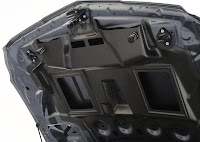
The engine peripherals were also completely reworked completely. The inlet side features a newly designed, larger header casing that gets its combustion air from carbon-fiber ram-air intake system integrated into the hood.

To achieve the desired power increase of almost 300 hp over the production engine, the exhaust side had to be newly configured as well. The Brabus 800 Biturbo system comprises two special exhaust manifolds with integrated high-performance turbochargers, and four water-to-air intercoolers. The stainless-steel high-performance exhaust system with free-flow metal catalysts and driver-controlled butterfly valve also was created specifically for the C-Class Coupe floorpan.

State-of-the-art engine Brabus test benches were used by the engineers for designing new mapping for engine electronics and on-board diagnostics. The result is maximum power yield while meeting strict current EURO V emission standards.

The Brabus 800 V12 Biturbo high-capacity engine, which like all Brabus high-performance engines is lubricated exclusively with MOTUL synthetic motor oil, produces 800 PS (788 bhp) / 588 kW at 5,500 rpm. The peak torque of 1,420 Nm (1,047 lb-ft) is limited electronically in the car to 1,100 Nm (811 lb-ft).

Power is transferred to the rear wheels via an appropriately reinforced seven-speed automatic transmission, which is shifted either automatically or manually via shift paddles on the steering wheel, and a Brabus limited-slip rear differential with a locking rate of 40 percent. The Brabus Bullit Coupe 800 features all state-of-the-art driving dynamics systems such as ABS, ASR and ESP.

The matte-black stealth coupe delivers unrivaled performance: in a catapult start just 3.7 seconds pass from 0-100 km/h (62 mph), 9.8 seconds to 200 km/h (124 mph). The 300-km/h (186-mph) barrier is shattered after 23.8 seconds. Top speed is more than 370 km/h (230 mph).

To be able to attain such extreme speeds while maintaining outstanding directional stability, the aerodynamic properties of the two-door car were modified extensively in the wind tunnel. The supplemental carbon-fiber Brabus front spoiler reduces lift on the front axle at high speeds. The carbon-fiber lightweight air routers for the air inlets in the front fascia go beyond optimizing the supply of cooling air for radiators and front brakes. These lateral air vents also allow the air streaming through the radiators to exit again as quickly as possible. Another significant contribution to the heat exchange in the engine bay is made by the Brabus air vents integrated into the front fenders behind the wheel wells.

The Brabus designers have developed an aerodynamically effective combination of rear wing and diffuser insert for the rear fascia in order to generate more downforce on the rear axle. This carbon-fiber component has cutouts on the right and left side for the dual ceramics-plated design tailpipes of the Brabus stainless-steel high-performance exhaust system.

The thrilling looks of the Brabus Bullit Coupe 800 is rounded out by the new Brabus Monoblock R wheels. They represent a fresh approach with their unique design that features two times five double spokes arranged on two different plains. While the posterior plain has a titanium paint finish, the anterior surfaces are polished and coated with a smoke-colored clear lacquer, which lends the wheel a highly individual character. In sizes 8.5Jx20 in front and 9.5Jx20 on the rear axle the Brabus Monoblock R wheels make perfect use of the available space in the wheel wells. The high-performance tires in sizes 235/30 ZR 20 and 275/25 ZR 20 are supplied by technology partners Continental, Pirelli or YOKOHAMA.

The height-adjustable coilover suspension was custom developed for the Brabus Bullit Coupe 800 in cooperation with technology partner BILSTEIN. It features gas-pressure shocks on front and rear axle with ten selectable settings each for bound and rebound for a sporty yet comfortable ride. Sport sway bars reduce body roll during fast cornering to a minimum.

The Brabus high-performance brake system consists of vented and grooved steel brake discs that measure 380 x 37 millimeters (15.0 x 1.45 in.) and 12-piston aluminum fixed calipers in the front. In combination with vented and grooved steel discs measuring 360 x 28 millimeters (14.2 x 1.1 in.) and six-piston fixed aluminum calipers on the rear axle it easily masters even highest brake loads.

The cockpit of the supercar has a distinctly sporty design. The interior was clad by the Brabus master craftsmen in the upholstery shop in a combination of black leather and Alcantara to match the outer skin. Red contrasting seams add discrete sporty highlights. This look is rounded out by genuine carbon-fiber components on the dashboard, center console and door trim. Further sporty features are the ergonomically shaped Brabus sport steering wheel as well as aluminum pedals and shifter.

Wednesday, October 16, 2013

Brabus Rocket 800 2012


  •  Brabus Rocket 800, 2012

Brabus has been building the worlds fastest street-legal sedans for many years. This tradition started in 1996 with the Brabus E V12 that had a top speed of 330 km/h (205 mph), and continued in 2003 with the E V12 Biturbo that reached 350.2 km/h (217.6 mph). In 2006 the Brabus Rocket, built in small-series production based on the first edition of the Mercedes CLS, improved the world record to 365.7 km/h (222.7 mph). The Brabus E V12 "one of ten" based on the latest E-Class, pushed the record to 370 km/h (230 mph).

The world debut of the new Brabus Rocket 800 from Brabus at the 2011 IAA in Frankfurt/Main now continues this unique success story. The high-performance automobile based on the new Mercedes CLS generation is powered by a Brabus 800 V12 Biturbo engine that produces 800 hp (788 bhp) / 588 kW of power and a peak torque of 1,420 Nm (1,047 lb-ft), which in the car is limited to 1,100 Nm (811 lb-ft). The exclusively appointed Brabus Rocket 800, built to order starting at EUR 429,000, reaches a top speed in excess of 370 km/h (230 mph) and accelerates from 0 to 300 km/h (186 mph) in just 23.8 seconds.

Like its predecessors the new Brabus Rocket 800 is also powered by a 12-cylinder high-capacity engine that was converted to 800 V12 Biturbo specifications in the Brabus engine-building shop. Using state-of-the-art machining processes and with utmost precision in every last detail the engine, based on the latest Mercedes 600 engines, underwent a displacement increase from 5.5 to 6.3 liters (336 to 384 cu. in.).

The displacement increase comprises a special crankshaft with longer stroke, larger, forged pistons and an increase in cylinder bore across the board. Intake and outlet ports of both cylinder heads are optimized for mixture flow, and fitted with sports camshafts.

The intake side was also completely reworked: the hood of the Rocket 800 features a carbon-fiber ram-air intake system that gets its combustion air through slits in the Brabus front element.

Another custom development is the Brabus 800 Biturbo system. It comprises two special exhaust manifolds with integrated high-performance turbochargers, and four water-to-air intercoolers. The stainless-steel high-performance exhaust system with free-flow metal catalysts and butterfly valve was also created specifically for the CLS floorpan.

Just as elaborate was the implantation of the V12 engine and all its peripherals into the modified engine bay of the sedan. Numerous components such as the engine mounts had to be custom designed.

Another engineering masterpiece of the Brabus engineers is the newly configured on-board electronics system. It includes newly programmed engine mapping that contributes equally to achieving maximum power yield and to meeting the current EURO V emission standards. Just as important is the adaption to the driving dynamics systems such as traction control, ESP, ABS and Brake Assist.

The Brabus 800 V12 Biturbo engine is lubricated with high-tech motor oil from technology partner ARAL and produces 800 hp (788 bhp) / 588 kW at 5,500 rpm. The even more enormous peak torque of 1,420 Nm (1,047 lb-ft), available from a low 2,100 rpm, is limited electronically in the car to 1,100 Nm (811 lb-ft).

For the first time the Brabus engine specialists combine this high-end engine with a seven-speed quick-shift gearbox. Gears are shifted by means of shift paddles on the steering wheel or automatically. The Brabus limited-slip differential, available with various final drive ratios, optimizes traction of the rear-wheel-drive car.

The Brabus 800 V12 Biturbo engine and the entire powertrain are operated with high-performance lubricants from technology partner ARAL.

With the longest available final-drive ratio the Brabus Rocket 800 reaches a top speed of more than 370 km/h (230 mph), making it the worlds fastest street-legal sedan. But this exclusive high-performance automobile is tops in other areas as well: 0 - 100 km/h (62 mph) in 3.7 seconds, 0 - 200 km/h (124 mph) in 9.8 seconds and 0 - 300 km/h (186 mph) in 23.8 seconds are figures that are as unique as this Brabus automobile itself.

To keep the enormous performance of the worlds fastest sedan safely in check at all times, the vehicles aerodynamic properties, suspension and brakes were modified extensively.

Like all other Brabus body components for the new CLS, the Rocket 800 front element that includes the front spoiler and the radiator frame was developed in the wind tunnel. The aerodynamic-enhancement components for the Rocket 800 are manufactured form ultra-light yet high-strength carbon fiber.

The front spoiler features large air inlets and side air vents to ensure optimal air supply of radiators, oil coolers and front brakes. Just as important is that it also minimizes lift on the front axle while improving drag. The air inlets above the radiator cutout provide the ram-air intake system of the 12-cylinder engine with ample combustion air.

The air vents in the front fenders are part of the sporty-elegant yet understated appearance of the four-door car. Brabus side skirts with integrated LED entrance lights calm the airstream along the vehicles sides. They also form a transition to the carbon-fiber fender flares on the rear axle, which add 40 millimeters (1.6 in.) to the width of the Brabus Rocket 800 compared to a stock CLS.

To achieve an optimal aerodynamic balance, the Brabus design studio has developed a rear wing and a rear diffuser for the CLS body. Side air vents in the rear bumper round out the sporty appearance.

A high-performance vehicle such as the Brabus Rocket 800 naturally also has a precisely calibrated high-end suspension. A height-adjustable coilover suspension was developed in cooperation with technology partner BILSTEIN. In addition to an adjustable ride height the gas-pressure shocks on front and rear axle feature ten selectable settings each for bound and rebound. Sport sway bars give the car even more agile turn-in and reduce body roll during fast cornering.

Maximum stopping power and absolutely fade-resistant brakes are further active safety features of the Rocket 800. The Brabus high-performance brake system was adapted to work with the Brake Assist system of the CLS. On the front axle it consists of vented and grooved steel brake discs that measure 380 x 37 millimeters (15.0 x 1.45 in.) and 12-piston aluminum fixed calipers. Vented and grooved steel discs measuring 360 x 28 millimeters (14.2 x 1.1 in.) and six-piston fixed aluminum calipers on the rear axle complete the extremely efficient and durable brake system.

The immense top speed of the Brabus Rocket 800, for street operations limited electronically to 350 km/h (217 mph), necessitates special high-performance tires. Technology partners Continental, Pirelli and YOKOHAMA mount the 19-inch one-piece Brabus Monoblock F wheels with high-speed-capable tires. The front axle features size 9.5Jx19 wheels and tires in size 255/35 ZR 19. Tires in size 285/30 ZR 19 mounted on identically sized wheels on the rear axle provide excellent traction.

The ergonomically shaped Brabus sport steering wheel with aluminum shift paddles always guarantees perfect, close contact with the suspension. Aluminum pedals, footrest and shifter add further sporty highlights. The Brabus speedometer with 400-km/h (250-mph) dial is also part of the custom-tailored interior as are stainless-steel scuff plates with backlit Rocket 800 logo.

They welcome driver and passengers to the exclusive atmosphere of a Brabus fine leather interior. The company upholstery shop has created an all-leather gray interior crafted with utmost precision from the finest supple leather. The leather is combined with high-gloss-polished black piano wood and a headliner made from black Alcantara. The headrests are embroidered with a Brabus and a Rocket 800 logo.

Brabus Rocket 800 - Technical Data
 =   Dimensions
        Length: 4.996 mm (196.7 in.)
        Width: 1.881 mm (74.1 in.)
        Height: 1.371 mm (54.0 in.)
        Curb weight: 1.980 kg (4,365 lbs.)
        Gross vehicle weight: 2.415 kg (5,324 lbs.)
        Tank capacity/reserve: 66 l / 14.0 l (17.4 / 3.7 gal.)
 =   Engine
        V12-cylinder three-valve alloy engine with two turbochargers
        Displacement: 6.233 cc (380.4 cu. in)
        Compression ratio: 9.0:1
        Rated power output: 800 hp (788 bhp) / 588 kW at 5,500 rpm
        Peak torque: 1,420 Nm (1,047 lb-ft) from 2,100 rpm (electronically limited to 1,100 Nm / 811 lb-ft)
        Fuel type: Super plus (98 ROZ)
        Motor oil: ARAL
=    Performance
        0-100 km/h (62 mph): 3.7 sec.
        0-200 km/h (124 mph): 9.8 sec.
        0-300 km/h (186 mph): 23.8 sec.
        Top speed: 370+ km/h / 230 mph (for on-road operations electronically limited to 350 km/h / 217 mph due to tires)
=    Fuel Economy
        City: 23.8 l / 100 km (9.9 mpg)
        Highway: 11.1 l / 100 km (21.2 mpg)
        Combined: 15.7 l / 100 km (15 mpg)
        CO2 emissions: 372 g/km (595 g/mile)